What do you give someone who seems to have everything? This might seem like an out of place question when referring to refugees fleeing the destruction and chaos of a war. What are refugee’s basic needs? Safe shelter, food and water, transportation out of danger, ability to communicate with loved ones as best they can if possible, finances and resources to stabilize themselves in a new life situation when they get to where they’re going, a safe place to put your head down on the way. The Polish government and the government of other friendly nations around Ukraine and in collaboration with all other European Union countries are providing all the above resources for refugees coming out of Ukraine to one degree or another. There is also free extra stuff everywhere. There are stuffed toys in boxes at many locations that I’ve been to along the way. So many of the needs have been considered and met. This is not just for those that are actively fleeing the war but this also applies to a large degree to Ukrainian citizens settling or settled temporarily in EU cities.
So when you’re members of a non-governmental organisation and you’re going into this type of war zone with needs already looked after in this way, you start scratching your head wondering what you can actually do to change the lives of the people that you’re trying to help. For me, advocacy has been a solution for decades for solving so many different kinds of problems for people in need all around me.
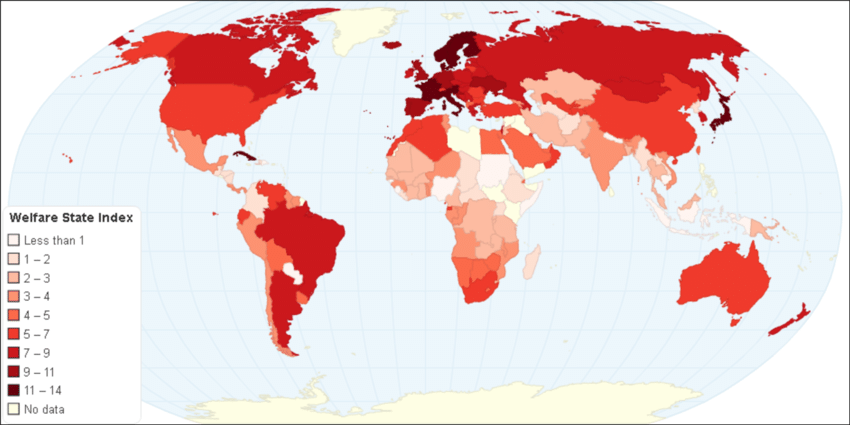
A lot of European countries have a welfare state system where there are some kind of resourses specifically to meet the needs of people in trouble like refugees. Some people may always argue that there is not enough resources put into this effort but nonetheless, for the most part, basic human needs are met for citizens by European welfare state systems. People who may need extra support include those people with newly diagnosed disabilities or even long term health conditions who have slipped through the cracks in terms of having their needs met. The EU response to the Ukraine crisis is nothing short of inspiring for me. It is a like a massive Welfare State system! This is the first time I’ve seen a relief effort for evacuation from a warzone close-up. I’ve seen things on the television before. Considering what I’ve seen on the TV/Internet over the years regarding crises in Africa or the Middle East that resulted in mass migration, the response to the Ukrainian refugee crisis created by the war, just seems to be very well organised. I don’t see people sleeping in the street. Don’t get me wrong refugees are very haggard and despondent in many cases but the physical needs do seem to be largely being met. There does not seem to be traditional style refugee ‘camps’ as such, anywhere in Europe. Refugee shelters are in very large public buildings and appear to be clean and well stocked in any cases that I’ve heard about or seen. Therefore when I’m trying to consider what I or the NGO I volunteer with can provide, I don’t want to duplicate services that are already working perfectly well.
I know that there is a need for people to go right into the face of danger and physically drive refugees out of hot warzones that are not served by public transport. During my second trip into Lviv last night, I got stuck at the border with a friend but within about 40 minutes I managed to find two very radical hardcore young men who were driving regularly from active war zones back and forward to the border with refugees. They quickly offered to drive us completely for free to Lviv. It looks like there is no speed limit in war zones!? I think we drove to Lviv in less than an hour at speeds of 100 mph at times, in order to be back before the 10pm curfew. Short of that heroic effort, i ask myself, ‘What do people need?’. Since coming here I have been absorbed into the team of MERCY WORLDWIDE an NGO with a worldwide network of over 10,000 committed volunteers and fundraisers.
As an English speaking volunteer for MERCY WORLDWIDE, I have been reaching out to three different groups of refugees passing through Warsaw and Lviv.
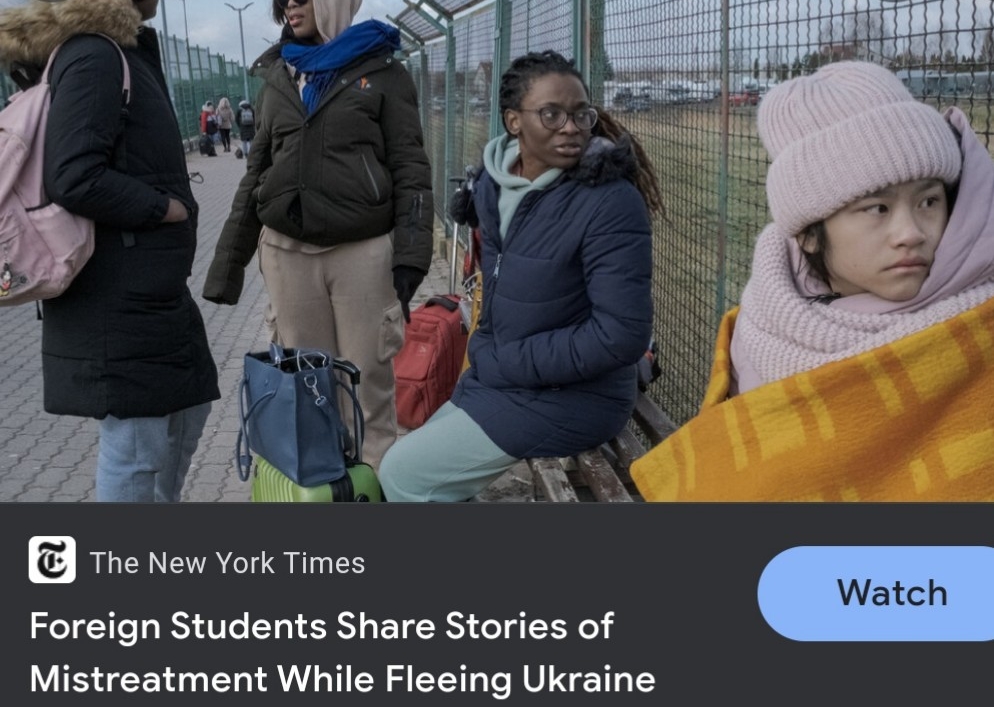
The first Group are non-EU students mostly from African background. These young people had suffered traumatic forms of racism on the journey out of Ukraine and were often relieved to find a friendly face in the crowd. We have liaised with the University of Edinburgh in a pilot case and are in contact with their management negotiating concessions for them as refugees in terms of transferring to degrees in the UK and then obtaining student visas to continue their studies. We have ongoing advocacy support for three of these students so far and are tracking the movements of another 7 or 8 who we met or who were referred to us by students that we met coming out of Ukraine. These students are currently residing in various cities in Europe trying to stabilise their situations. It is sad that they are being treated differently to students who are Ukrainian nationals but perhaps understood (at least in part) due to the fact that the Ukrainians cannot transfer within their home country.
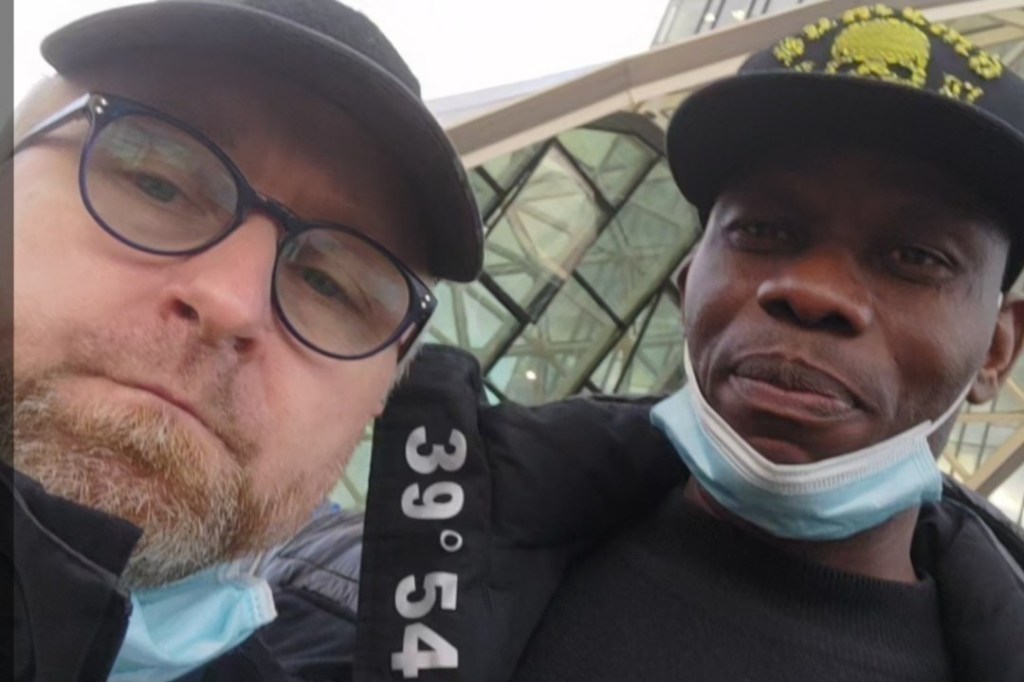
The second group of refugees where black men married to Ukrainian women with mixed race children. We provided assistance in various ways to these families and they do appear to have settled in stable circumstances in EU countries.
The third group are Ukrainian nationals and now that we have refugee friends in stabilized groups who are members of our Ukrainian church and are volunteers in both Lviv (mostly men) and Warsaw (mostly women), we are working with other refugees in a pilot project and will track their progress and provide them with information and advocacy services as they transition into different parts of Europe.
At one of the hotels that we stayed in Warsaw we bumped into a couple of fairly ‘shady’ characters who said they worked in Soft Intelligence. We asked them for advice and one of them said that ‘to offer hope without a plan in this scenario is useless’. As I’ve said above already, here in this scenario, the whole of the European Union has a very concrete and specific ‘plan’ which is working very well. Therefore, the advocacy services that we are offering to refugees over an extended period are in fact offering hope. We are offering hope within the context of the great plan already in position funded by the European Union and all the governments of the member States, as well as the United Kingdom, operating as an individual state but also offering resources to Ukrainian nationals with family members in the UK or links to friendly organisations within the UK. Offering advocacy services through information and representation puts a human face on the resources available.
We’re finding that this is bringing peace and hope to individuals and our volunteers who themselves are refugees and have come through the refugee system and made the refugee journey (as previously described by my wife Deirdre) are well placed now to offer this reassurance to many others who are making this journey. We are employing volunteers inside Ukraine to do the same job. Our volunteers inside Ukraine (mostly men) now have a specific purpose above and beyond providing the physical relief (which is actually only being facilitated by those Ukrainian men that have the means to do so). Offering information and reassurance is something that can be done by almost every one of our volunteers inside Ukraine as well as those beyond the border. We can now do this in addition to offering physical support.
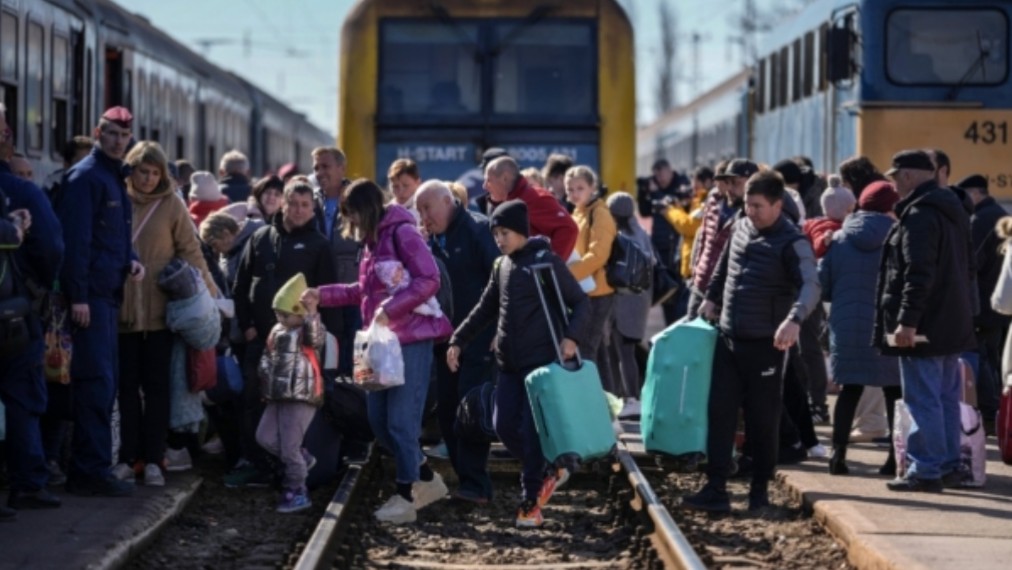
On the train returning from Lviv, on the way back after my first trip, I noticed a rollercoaster of emotion and mood starting with the onset of apathy once people were settled on the train, followed by a wave of relief and children looking out windows at 90 degrees once they crossed over the border into Poland. Perhaps also a little guilt at this point, conflicted at their relief in spite of loved ones left behind. There was then an interest in everything passing by, out the window and people were watching Polish houses, Polish architecture as the farms were rolling past. But then again coming into Warsaw there is a certain level of panic that set in with some refugees not knowing where they were going and what was going to happen. Some didn’t have any concrete plan. It is this roller coaster of emotion that we can touch on, for some people, and to some degree offset with the human contact in Lviv where people are passing along their way on the journey to safety. This is now our plan within the plan. The men on the street are feeling pumped! Every day they are relaying stories about women in tears, so grateful for the face to face offer of information.
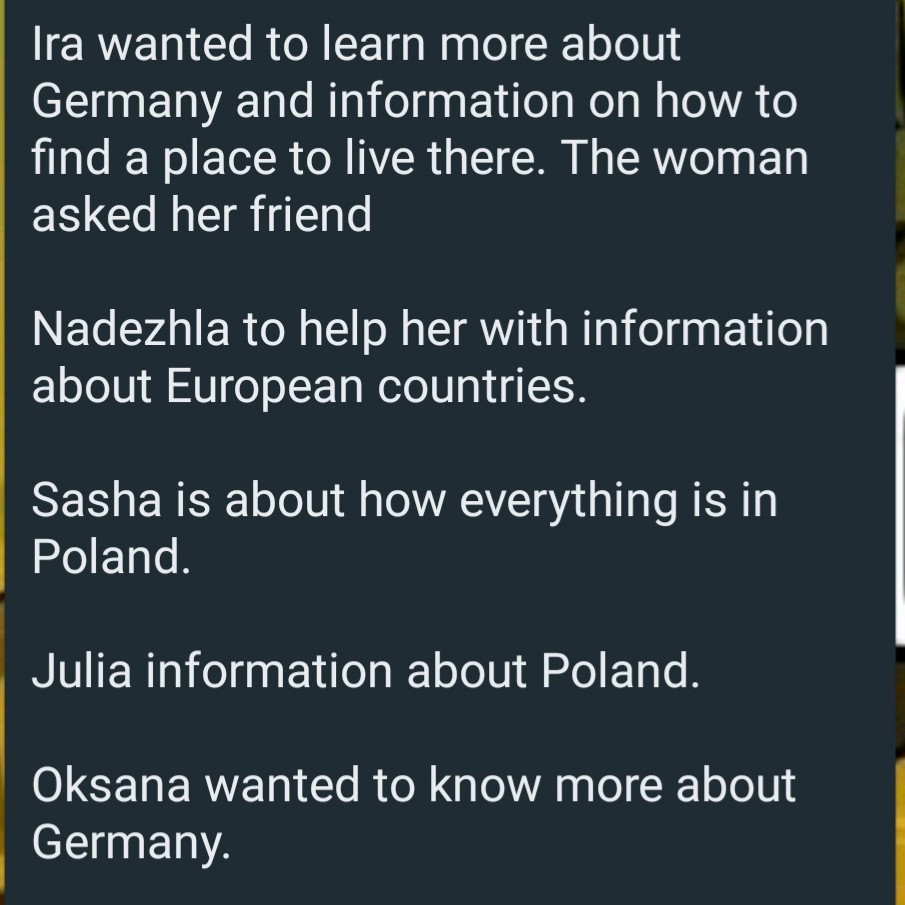
We now have a coordinator in Lviv. We have a volunteer Ukrainian translator within the project which is our friend Lara (who still works as a professional translator from Warsaw). We have the point person in Amsterdam, Tom, responsible for generating the documents regarding resources available in the Netherlands. We have a volunteer in Berlin updating the document for refugees asking for information about Germany. We have have our first effective volunteer team on the ground in Lviv which we are scaling up tomorrow in Lviv. We have a committed volunteer now in Warsaw responsible for updating the document to orientate refugees on their way to Poland. There are several other positions required over the coming days and the trip to Lviv this week was so that every member of our Lviv group can start to work effectively on a daily basis to help other people.
Aside from the advocacy network project our volunteers will of course where possible, be involved is more physically tangible work taking part in the grand plan. I offer my sincerest thanks to all those who made it possible for me to be a part of this work. Like many other volunteers I came to Poland and Ukraine not knowing what I could do (in my case having a very radical uninformed reaction to what I’d seen on the news). But I believe I made a difference and I want to continue to make a difference by fundraising to support the small ‘green army’ of my comrades now growing across Europe from Lviv to Warsaw through Berlin to Amsterdam and soon in the UK and other cities!
Our volunteers will be supported by MERCYWORLDWIDE (www.mercyworldwide.org)
 Morganite's Blog