Part I: The Calling
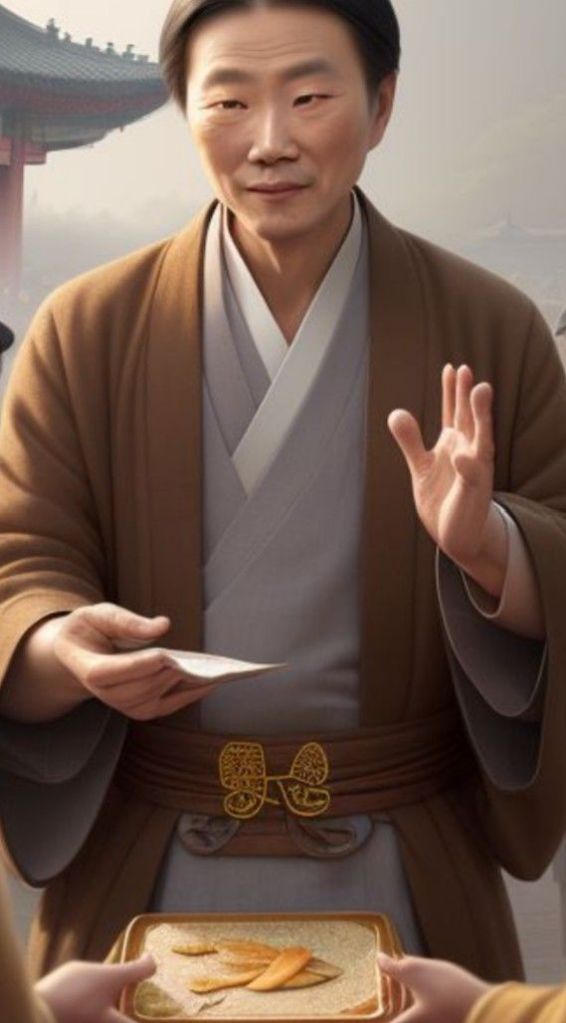
In the bustling city of Luoyang, during the Eastern Han Dynasty, a humble scholar named Shang-Dai was deeply pondering his faith. Converted by The Apostle Thomas while his Austronesian spice ship was moored at the Kerala port of Muziris in 72 AD he was now a part of a growing Christian community including 50 Christian traders who regularly journeyed along the Silk Road and the Maritime Silk Road shipping lanes. Shang-Dai had found profound truth in the teachings of Jesus and married a low-born member of his church. He grieved for some time after she died in childbirth. Their love had been shortlived but enough to last a lifetime. Eventually his thirteen-year-old son, Liang, had also embraced this faith and together, three years later, in 88 AD they felt a divine calling to spread the gospel to distant lands.
One evening, as the sun dipped below the horizon, casting an amber glow over the city, Shang-Dai and Liang knelt in prayer. The words of the Great Commission resonated deeply within them:
*”Therefore go and make disciples of all nations, baptising them in the name of the Father and of the Son and of the Holy Spirit, and teaching them to obey everything I have commanded you.”* (Mt 28:18-20)
With unwavering resolve, they decided to embark on a journey to the little known lands beyond the southern seas, carrying with them only a meticulously copied scroll of the prophet Isaiah.
Part II: The Voyage Begins
Securing passage on a merchant vessel owned by an Austronesian disciple and bound for the southern islands, Shang-Dai and Liang set sail from the port of Hepu leaving behind a growing body of believers including one of the King’s generals. The ship, sturdy and weathered, creaked as it cut through the azure waves. The vast expanse of the South China Sea stretched before them, teeming with marine life. Flying fish glided over the water’s surface, and occasionally, dolphins danced alongside the ship, their sleek bodies gleaming in the sunlight.
The voyage was both exhilarating and arduous. Tropical storms occasionally battered the vessel, their fury testing the sailors’ mettle. Yet, amidst the challenges, there were moments of serene beauty—sunsets that painted the sky in hues of gold and crimson, and nights where the stars blanketed the heavens, guiding their way.
Part III: Encounter in the Spice Port
Six weeks into their journey, the ship anchored at a bustling port in Java renowned for its spice trade. The air was thick with the aroma of cloves, nutmeg, and cinnamon. Market stalls overflowed with vibrant textiles, exotic fruits, and intricate handicrafts.
While exploring the market, Shang-Dai’s attention was drawn to a man clearly engrossed in a heated debate about the nature of the divine. The man’s name was Pok, a native of the island of New Guinea (6 weeks to the east), and he spoke the broken Austronesian pigeon that he had learned from the sailors he worked so hard for. Intrigued by his fervor and curiosity, Shang-Dai approached him.
Through gestures and the many shared words they knew, Shang-Dai introduced Pok to the prophecies of Isaiah, highlighting the passages that foretold the coming of a savior. Pok listened intently, his eyes reflecting a deep yearning for truth. Over the next few days, they met regularly, with Liang who had strategically started to learn Pok’s native tongue, assisting in some translation. Moved by the message and the evident conviction of his new friends, Pok embraced the faith, was baptised and expressed a desire to share it with his people.

Part IV: Journey to the Highlands
Eager to bring the gospel to his homeland, Pok invited Shang-Dai and Liang to accompany him to his village nestled in the highlands of New Guinea. The journey overseas past many islands and particularly inland was a stark contrast to the open seas. They traversed dense rainforests, where towering trees formed a verdant canopy overhead, and the air was filled with the calls of exotic birds and the hum of insects. Crystal-clear streams meandered through the underbrush, and vibrant orchids clung to moss-covered trunks.
Upon reaching the village, they were warmly welcomed by Pok’s kin. The villagers, adorned in colorful attire made from woven fibers and adorned with feathers, gathered around communal fires in the evenings. Shang-Dai shared the prophecies of Isaiah (as well as the many teaching of Jesus he and his brothers had memorised), speaking of a servant who would bring justice to the nations and be a light for all people. Pok was able to assist with most of the translation. The chief’s elder sister, a respected matriarch, was particularly moved by these teachings. Recognizing the parallels between the prophecies and her own people’s ancestral stories, she embraced the faith, followed by several other villagers, particularly those who like Pok had worked in the ships and already had a deeper understanding of what Shang-Dai had taught.
Part V: Crossing to Boigu Island
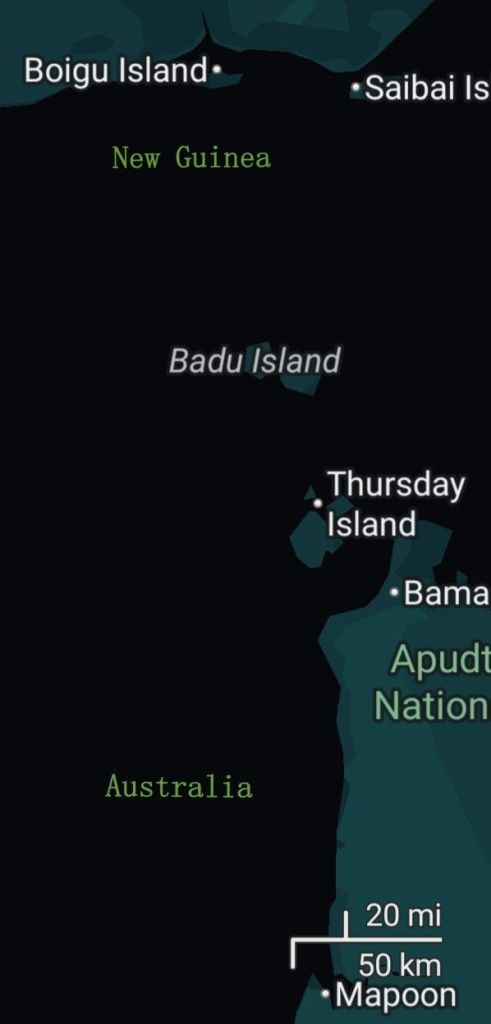
After spending several months in the highlands, establishing a string of churches, Shang-Dai felt a stirring to continue his mission. Pok spoke of Boigu Island, a place where traders and fishermen often gathered, serving as a bridge between New Guinea and the lands further south. Laing had also had a strange dream of an old black man with a painted face pointing to a large rock surrounded by strange and dangerous animals! Pok explained it sounded like MendiDena, a place across the southern sea that he heard Papuan sailors mention. Seeing this as a divine sign, they decided to journey to the land to the south.
The voyage to Boigu Island along the coast, to the south of the country, was brief but filled with wonder. The waters were teeming with life; schools of fish shimmered beneath the surface, and sea turtles gracefully glided by. Mangrove forests fringed the shores, their tangled roots providing shelter for a myriad of creatures.
Upon arrival, they met Sole-Sole, a seasoned fisherman with weathered skin and kind eyes. He spoke of the Kaurareg people, the traditional custodians of the nearby islands and parts of the mainland of MendiDinu (as his tribe called it – modern day Australia). Sole-Sole described their rich culture, deep connection to the land and sea, and the intricate art forms that told stories of their ancestors. Sole-Sole spoke sparingly of his former life as as a Sandalwood and beeswax sailor between the Timor islands and the large port of Óc Eo in Vietnam. He looked far off to the west and calmly stated how much he had changed since those wild younger years. Pok’s eyes briefly met with Shang-Dai’s exchanging a knowing and hope.
Part VI: The Final Leg to Australia
Inspired by Sole-Sole’s tales of MendiDinu, Shang-Dai felt compelled to bring the gospel to the Kaurareg. With Pok and Sole-Sole’s assistance, they prepared a small outrigger canoe for the journey. The sea was calm, and a gentle breeze filled their makeshift sail. Flying fish occasionally leapt from the water, and distant spouts signaled the presence of whales migrating through the strait.
They passed Badu Island and as they approached the Australian mainland, the coastline unfolded before them—a mosaic of sandy beaches, rocky outcrops, and dense bushland. The air was filled with the scent of eucalyptus, and the calls of kookaburras echoed through the trees.
Part VII: Among the Kaurareg
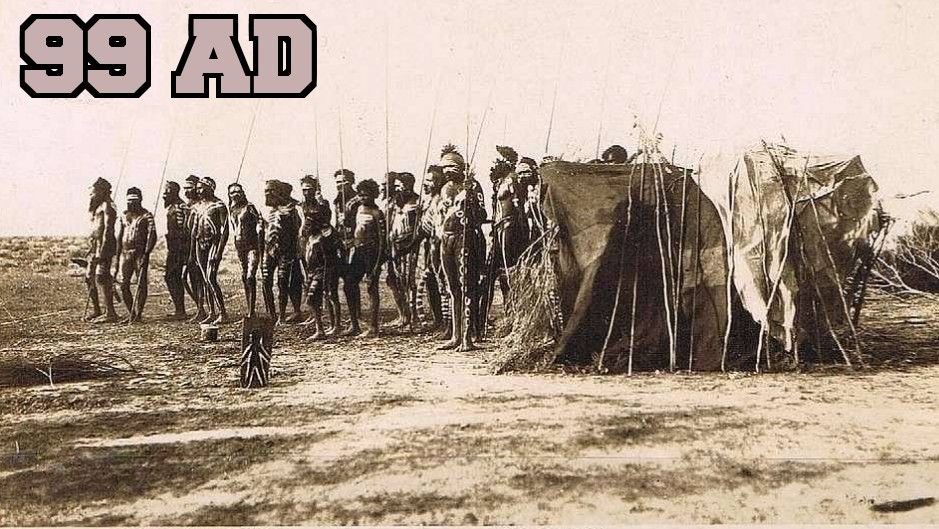
Setting foot on the mainland, Shang-Dai and his companions were greeted by members of the Kaurareg people, the traditional custodians of the Torres Strait Islands and parts of the northern Australian mainland. The Kaurareg had a rich maritime culture, with deep ties to both the land and sea. Their communities were known for their intricate art forms, storytelling traditions, and sustainable living practices.
Despite the language barrier, Shang-Dai experienced a miraculous gift: the ability to understand and use the pan-Australian sign language, a system of gestures and signs used by various Indigenous tribes across the continent. This form of communication was especially prevalent among groups speaking different dialects, facilitating trade, ceremonies, and social interactions. Shang-Dai had not understood why he had never been able to use his miraculous gift of speaking in tongues since the Apostle Thomas had laid hands on him many years before. But now it’s suddenly came into use as he fulfilled his destiny.
Through this sign language, Shang-Dai conveyed his message of hope and salvation. The local people were amazed that a white man knew their code without having learned it. He shared the prophecies from the scroll of Isaiah, highlighting passages that spoke of a servant bringing justice and light to the nations. The Kaurareg, with their rich oral traditions, found resonance in these stories, drawing parallels to their own ancestral narratives. They saw the deep respect and love between Pok, Shang-Dai and Laing and realised that they had no tribal traditions to separate them as brothers.
During his stay with the Kaurareg, Shang-Dai encountered individuals suffering from various ailments. Moved by compassion, he laid hands on them to show love, and was astounded as many experienced healing. Not only had he been given the gift of speaking to the native Australians without words but the use of the gift had unlocked his double gift of miraculous healing. These acts of kindness and the newfound ability to communicate deeply endeared him to the community. The medicine men were also amazed and perplexed and spoke among themselves cautiously.
Part VIII: Inland Journeys and Cultural Exchange
Word of Shang-Dai’s teachings and healing abilities spread to neighboring tribes. Elders from inland communities expressed interest in learning about this new faith and the prophecies he carried. With the guidance of Kaurareg leaders, Shang-Dai embarked on a walkabout—a traditional journey across the land—to share his message.
As he traveled, Shang-Dai marveled at the diverse landscapes: from dense eucalyptus forests echoing with the laughter of kookaburras to expansive grasslands where kangaroos grazed under the watchful eyes of wedge-tailed eagles. He observed the deep connection the Indigenous peoples had with their environment, understanding that their spirituality was intertwined with the land, the seasons, and the cosmos.
In each village, Shang-Dai used the universal sign language to communicate, respecting local customs and traditions as best he could. He was also picking up words from the native language too but he used the signing most readily and always even when words were wanting. He listened to Dreamtime stories—tales of creation and ancestral beings—that bore striking similarities to the narratives he knew. This mutual exchange enriched both Shang-Dai and the communities he visited, fostering a deep sense of respect and understanding especially when the themes of justice, mercy and grace were present.
Part IX: Legacy in Art
Before departing each community, Shang-Dai would participated in local ceremonies so long as there was no contravention of his faith. In one coastal village, as a gesture of gratitude, the elders decided to commemorate his visit through rock art. Under a deep, outcrop on a flat cliff face near the main gathering area, they painted a figure in white ochre—a representation of Shang-Dai. Notably, the figure was depicted without a mouth, symbolizing his use of sign language to communicate profound truths.

This artwork served as a lasting testament to the encounter, blending traditional Indigenous art styles with new narratives. Over time, such depictions became part of the community’s storytelling, teaching future generations about the visitor who brought new teachings and healing.
Part X: Seeds of Faith. Establishing the Oasis Outpost
As months turned into years, the seeds of faith that Shang-Dai planted began to grow. Some Indigenous communities who members joined him integrated aspects of his teachings with their own spiritual practices, finding common ground in the values of love, compassion, and respect for creation.
Shang-Dai’s journey across Australia became the stuff of legend. Stories of the compassionate traveler who spoke without words and healed the sick were popular for some years.
After years of traversing the vast Australian landscape, Shang-Dai and his son, Liang, discovered a thriving oasis deep within the arid interior. This verdant enclave, nourished by subterranean springs, was a hub of life amidst the desert expanse. Recognizing its potential as a center for their mission, they established a modest outpost, constructing shelters from native materials and cultivating the fertile land.
Embracing the local culture, both father and son formed bonds with the indigenous inhabitants. From among their church, Shang-Dai married Marala, a skilled weaver known for her intricate designs that told stories of her ancestors. Liang wed Kirra, a spirited hunter whose prowess with the spear was renowned among her people. Through these unions, they deepened their integration into the community, learning the local language and customs.
Part XI: Sharing the Sacred Texts
The scroll of Isaiah, meticulously preserved throughout their journey, became a focal point of their teachings. Recognizing the importance of making these prophecies accessible, Shang-Dai and Liang sought the assistance of Wyan, a respected elder and keeper of oral traditions who had humbly set aside some aspects of his faith and become a baptised believer. With Wyan’s guidance, they began transcribing the scroll onto strips of native bark, utilizing natural pigments to replicate the ancient script.
This collaborative effort not only preserved the sacred texts but also fostered a mutual exchange of knowledge. Wyan, fascinated by the parallels between the prophecies and one of his people’s Dreamtime stories, became an ardent student and proponent of the new teachings. Under his influence, many villagers embraced the faith, and only blending it where possible with their ancestral beliefs when there was a clear overlap. This helped others to embrace the waters of baptism.
Part XII: The Rise of Opposition
However, this burgeoning community faced unforeseen challenges. Mundoo, a traditional witch doctor from a neighboring tribe, viewed the new teachings as a threat to his authority and the old ways. Consumed by jealousy and fear of losing his influence, he began to sow seeds of discord among the tribes.
Mundoo’s machinations reached the ears of the Warrigal, a formidable tribe known for their warrior culture and territorial dominance. Exploiting their predisposition for conflict, Mundoo painted the missionaries and their converts as heretics undermining the sacred traditions. Incited by his fervent rhetoric, the Warrigal resolved to eradicate this perceived blasphemy.
Part XIII: The Tragic Massacre
One fateful night, under the cloak of darkness, the Warrigal descended upon the oasis. The attack was swift and merciless. Shang-Dai, Liang, and their families were among the first to fall. The converts, caught unprepared, were overwhelmed by the onslaught. The oasis, once a beacon of hope and unity, was reduced to smoldering ruins.
In a single, brutal stroke, the nascent Christian movement in Australia was extinguished. The teachings that had begun to take root were silenced, and the community that had embraced them was no more. Mundoo advised the Warrigal to carry away the remains and deposit them deep in sacred land as an offering to their gods. All evidence of their existence was removed. The Warrigal sough out the native church leaders across Australia and put them to death burning any items that might remind them of the missionaries. Within a single generation all evidence of their presence was gone. Only faint whispers remained in old stories of those who came to teach.
Part XIV: The Enduring Legacy of Rock Art
Yet, amidst the devastation, remnants of their presence endured. The rock art, meticulously created on the cliffs surrounding the oasis, survived the ravages of time and violence. These paintings that depicted white, mouthless figures—symbolizing Shang-Dai’s use of sign language—standing amidst native symbols and motifs.
For generations, these enigmatic images puzzled those who beheld them. Some saw them as mere curiosities, while others attributed them to ancestral spirits or visitors from distant lands. Unbeknownst to them, these artworks were silent testaments to a brief but profound chapter in Australia’s spiritual history—a chapter of hope, cultural exchange, and tragic loss.
Epilogue: Rediscovery and Reflection
Centuries later, anthropologists and historians studying these ancient rock paintings began to unravel their mysteries. The depiction of foreign figures suggested early interactions between indigenous Australians and outsiders long before documented European contact. This discovery prompted a reevaluation of Australia’s history, acknowledging the possibility of ancient cross-cultural exchanges.
Epilogue: The Unseen Threads of History
Thus, while the first-century Christian movement in Australia was tragically short-lived, its essence survived through art, waiting patiently for the world to rediscover and honor its story. The story of Shang-Dai, the Chinese disciple of Jesus, and his voyage to the shores of Australia via Papua New Guinea in 99 CE, became an integral, albeit hidden, thread in the rich tapestry of human history. Their legacy, preserved in stone, serves as a poignant reminder of the enduring human spirit and the complexities of cultural integration.
Disclaimer: This short story was a historical fiction to show how it is theoretically possible that the whole world as we know it today was evangelised in the first century.
 Morganite's Blog