
The Restoration Movement which has spanned the 216 years from 1809 to 2025 has had its ups and downs in terms of growth and division! Thomas Campbell originally preached the message of Christian unity trying to do away with denominationalism as if it were possible. His son Alexander Campbell wrote in 1837 listing several other movements that had existed prior to the Restoration Movement. One such movement was the Donatists who he mentions in one of his Millennial Harbinger articles in 1837.

Campbell writes ‘Then of the Donatists, who, for three centuries, from the beginning of the 4th to the beginning of the 7th century, along with the Novatians, plead the same cause of purity and righteousness against the Catholics.’ (Notes of Apostacy, paragraph 2)
At the time of the Donatists the Christian movement had already existed for 287 years and had already been polluted in some places with innovations such as infant baptism.
After the Apostolic age, disciples continued to write down their convictions.
Justin Martyr (c. 100–165 AD) clearly represented an adult believer’s baptism when he wrote in the early second century.
“We have learned from the apostles this reason for baptism: that we go down into the water full of sins and of evil, and that we come up, having been made new, having received forgiveness of our former sins.” (First Apology, 61).
Irenaeus of Lyons (c. 130–202 AD) is the first writer to hint at the practice of infants being baptised although he does not mention it explicitly, perhaps as it had not yet been accepted by all, but was a minority innovation.
The fact that some parts of the church were debating the practice is highlighted by Tertullian (c. 155–240 AD) when he wrote “The delay of baptism is preferable; for when a man has attained to the fullness of his age, and is in a position to be conscious of the sacrament, let him then receive the grace.” (On Baptism, Chapter 18).
The first writer (whose work we still have) to falsely claim that infant baptism was a teaching of the Apostles, was Origen (c. 185–254 AD) who wrote “The Church received from the Apostles the tradition of giving baptism even to infants.” (Commentary on Romans, 5:9).
Cyprian of Carthage (c. 200–258 AD) develops the argument for the heresy with the addition of original sin writing “Even infants should be baptized, for they are born with the stain of original sin.” (Letters, 58:2).
One thing I find particularly fascinating is that there are absolutely no contemporary accounts stating that the Roman persecutors (throughout the whole 287 years of centralised state and localised persecution), tortured or executed babies for being Christians. After almost constant persecution in one form or another from 33 AD to 311 AD not a single baby was martyred!
The Romans in their barbarous wisdom understood that the babies of the Christians were not a threat as they possessed no life or doctrine that contradicted Roman theology. In actual fact, there were many traitors even amongst the churches and even amongst the church leadership who were giving up the names of Christians to be arrested, tortured and executed. These people who became known amongst the disciples as ‘Traditores’ (those who betray), are never documented as giving up babies or infants to the authorities. Even amongst the Donatist sect that was birthed as a direct result of the Traditores taking back their seats as shepherds, when Constantine ended The Great Persecution, there is no hint that the traitors or the Romans believed that the babies were Christians!
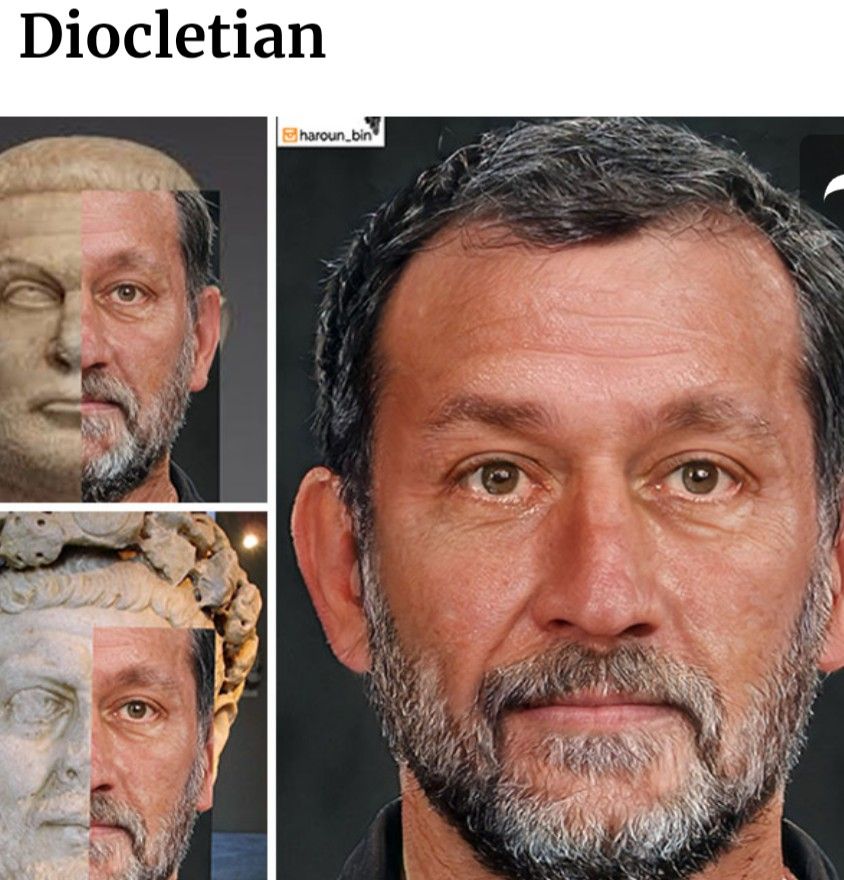
The great persecutor, Diocletian, born as Gaius Aurelius Valerius Diocles around 244 AD in Dalmatia (modern-day Croatia), defeated his Roman competitor for the throne of Emperor, Carinus in 285 AD at the Battle of the Margus (modern-day Serbia). This victory consolidated his position as the sole ruler of the Roman Empire.
The Christian writer Lactantius (240-320 AD) writes in “De Mortibus Persecutorum” (“On the Deaths of the Persecutors”) that Diocletian appointed Galerius as a mini Caesar. Both men were vicious militarists and mass murderers of Roman citizens for the purpose of confiscation of wealth and the rape of wives and daughters from all corners of their realm and these atrocities were normal practice during their reign of terror.
Diocletian had a habit of sacrificing humans and using their entrails to seek guidance from the Roman gods. It was perceived that Christians in his army were confusing the clarity of his witches and as a remedy he decided to force all his soldiers to take part in idolatrous sacrifices in order to try to cleanse his army from Christians. Of course the presence of disciples in the Roman army went back to the time of John the Baptist and afterward to Cornelius in Caesarea in 41AD.
The mother of Galerius, herself a devout Pagan, was also at odds with Christian members of her family who refused to eat the meat sacrificed to idols and instead chose periods of fasting and prayer to set themselves apart. She incited her son who in turn incited Diocletian to even more barbaric treatment of the Christians right across the empire that also included the rooting out and public burning of the sacred scriptures, which Diocletian did as a public show of strength, together with Galerius. Diocletian also had his Valerian guard march to and physically demolish the buildings where the Christians had meetings.
Lactantius, himself an eye witness writes, 313–315 CE, “Diocletian, influenced by the advice of his Caesar Galerius, issued an edict commanding the destruction of Christian churches, the burning of their sacred books, and the prohibition of Christian assemblies. The persecution was carried out with such fury that prisons were crowded with bishops, priests, and deacons.”
(De Mortibus Persecutorum, Chapter 12)
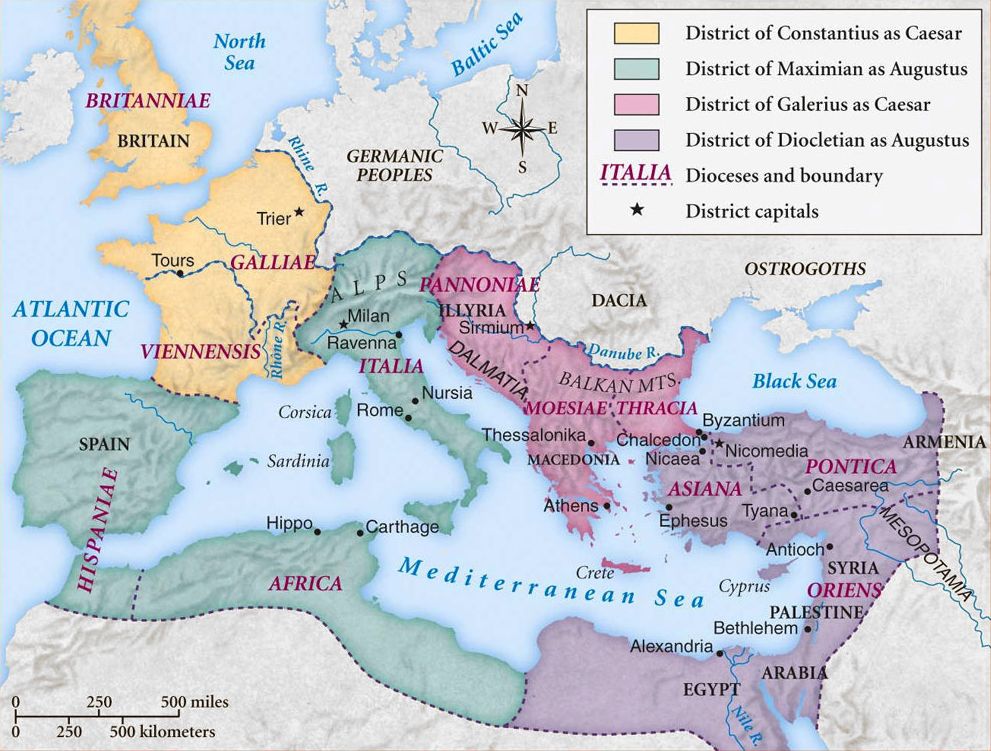
This persecution organised via central government was most fierce in the Balkans and Danube Regions, (modern Greece and Macedonia, Croatia etc) ruled by Galerius. It is estimated 1000s were martyred. Elsewhere across the Eastern Provinces (Modern Turkey, Syria, Palestine, and Egypt) 100s or 1000s died. In population centers in particular, like Nicomedia (the modern day Turkish city of İzmit – Roman province of Bithynia – Acts 16:7), 1000s died – (Lactantius describes mass executions, also reported by Anthimus, bishop of Nicomedia. In addition the Christian apologist Eusebius also states that Antioch and Alexandria in modern Egypt, saw intense persecution (estimated 100s to 1000s). One well loved leader, Peter of Alexandria was martyred in 311 AD.
In North Africa, Carthage (Tunisia and surrounding areas) became a hotspot for persecution due to the size of the churches (100s to 1000s were martyred).
The Christians expected the faceless pagan Romans to attack at any time but the Traditores (ex-church leaders turned informants) who they had known personally as their previous brethren, but who now fled to the bosom of the Antichrist, were branded by the faithful as those who had never even become Christians in the first place.

“There are some among us who handed over the Scriptures, but they are not true Christians, for they have betrayed the trust of God.” (*Optatus of Milevis, Against the Donatists, Book 1).
The Traditores had not only recanted their faith but sought the favour of their persecutors to go to the extreme of giving the details of their congregations to the authorities so they could persecute more effectively. This was second only in evil to the giving up of the Holy Scripture which Diocletian elicited with zeal and commanded the whole Empire to do also.
Lactantius quotes Diocletian’s Edict of 303 AD, “We ordered that the churches be razed to the ground and the scriptures be destroyed by fire.” (*Lactantius, On the Deaths of the Persecutors, Chapter 13).
Eusebius of Caesarea also states with regards to the confiscation of Scriptures, “I saw with my own eyes the houses of prayer thrown down to the very foundations and the inspired and sacred Scriptures consigned to the flames in the marketplaces.” (Ecclesiastical History, Book 8, Chapter 2).
Lactantius also writes about a Christian who was arrested and tortured nine times but did not recant who he names Donatus. This is the same first name as Donatus Magus who became famous for being the leader of a large group of churches that defected from the Catholic Church as a result of the Traditores being brought back into unrighteous leadership of the churches after the persecution paused in 311AD. For in that year, many Traditores who had survived the persecution immediately took back their old jobs as church leaders. It may well be that Galerius ended the executions knowing the Traditores would be taking over the churches!
Galerius announced the end of persecution in the hypocritical ‘Edict of Serdica’ in 311. In it, he basically says – ‘we thought it best to kill you but now we will show the beauty of Roman morality in our clemency’. He had already committed the genocide of the faithful shepherds in his provinces and possessed in his grip the Traditore spys used to commit his atrocities.
In the North African Mediterranean, Donatus led the split in 311 AD when Caecilian was elected Bishop of Carthage by a Traditore Overseer. This is recorded by Optatus of Milevis (Against the Donatists), Book 1, Chapter 19 stating “They accused Caecilian of being ordained by one who had betrayed the sacred scriptures, thus rendering his office null.”
The Christian community had suffered for the best part of three centuries and were now facing the taking over of their churches by collaborators and their minions. In 312 AD the Donatist movement gained significant support in North African Numidia.
In 313 AD Emperor Constantine bestowed temporal blessing on the Christians (now led by many Traditores) reversing the persecution and his Edict stated, “We have ordered that copies of the Scriptures, which have been gathered from all places, be restored to the churches.” (Edict of Constantine and Licinius, 313). The Council of Milan that issued the Edict did not publish which Bishops were Traditores.
In 314 AD, Emperor Constantine convened the Council of Arles to address the Donatist controversy. The council sided with Caecilian and condemned the Donatists and Constantine writes to all the bishops (Traditores included) the words preserved by Eusebius, “The assembly has decreed that the purity of the church must not be sullied by the schism of the Donatists, and their opinions are to be rejected. (Letter of Constantine to the Bishops (Eusebius, Life of Constantine, Book 2, Chapter 63))
The council also ruled that “The validity of the sacrament does not depend on the worthiness of the minister”, providing much-needed justification for the Traditores that were now baptising and giving communion at Christian meetings as well as undermining and setting aside many biblical passages about the character qualifications of church leaders!
Constantine accuses the Donatists of the very thing that they have objected to… Impurity in leadership. Ah the schemes of Satan. That those in power use lies, propaganda and half truths from the earliest times. As Diocletian destroyed the disciples and sacred Scripture, now Constantine in 316 AD, ordered military action against the Donatists. The schism hardened, with Donatists martyred for their cause. Their writings, where they could be found, were destroyed also, to remove any primary evidence of their views.
Thus the Romans only ceased their persecution for the five years between 311 and 316 AD. Thus the unbaptised Constantine was no more ‘Great’ or a friend of the Christians than King Herod of Judea!
A contemporary source, writing of the Donatists: Augustine (Letter 88) states “They call themselves martyrs for resisting the Emperor’s decrees, yet they reject the peace of the Catholic Church.”
After the death of Constantine in 337 AD (who deliberately delayed his own baptism until he was dying) the Donatists thrived under Constans, who was more lenient toward them.
The Roman Catholic Church had already moved into a phase of adorning itself with pagan style opulent worship with the unbaptised Constantine leading the way at big ceremonies adorned in jewels and shimmering head-dresses as an angel of light!
By 340 AD the Roman Catholic Council of Gangra disfellowshipped those who complained about Catholic leaders wearing special clothes at church services. Canon 12 states:
“If any one shall condemn those who wear oraria (stoles) in the church, and shall call them, for wearing them, hypocrites, let him be anathema.”
Roman Catholic writers almost unanimously, in the following decades, wrote that baptism was rightly given to babies. (Augustine of Hippo (354–430 AD), Gregory Nazianzus (c. 329–389 AD) and John Chrysostom (c. 349–407 AD) all agreeing on this.
Council of Carthage (411 AD)
One hundred years after the end of Diocletian’s persecution, at the Council of Carthage in 411 AD (when all the Traditores were dead), the Catholic bishops stated: “We do not defend traditores; we condemn them. But we say that the sins of others do not destroy the innocence of the Church.” Thus they claimed retroactively, that rather than their predecessors who let them lead churchs, the ‘modern’ view of their day was to condemn those men. This was very much like the statements of our modern pope’s describing the medieval inquisition, expressing regret whist claiming that the church both then and ‘still today’ is as pure as it always was since the beginning.
The Roman Catholics systematically destroyed all the writings of all of the Donatist leadership and so the only views that survive about their teachings on baptism are from men like Augustine of Hippo and other contemporaries. Augustine of Hippo was put in charge of the Catholic Church in North Africa by the Roman Catholic army that came to suppress the Donatists militarily in 398 AD. He later instigated physical persecution on them with flogging and confiscation of property (returning to the practices of Diocletian!). No one needs to explain how unwise it would be to take the views of your enemies regarding your teachings. I take the writings of a persecutor such as Augustine of Hippo with a pinch of salt. One only has to look at what Protestant commentators write about today, when they describe the 16th and 17th century Anabaptists, to see how their views can easily be twisted. Luckily the Anabaptist’s writings have survived en masse due to the printing press. It is clear from the writings against the Donatists that they rejected Roman Catholic baptism and routinely rebaptised Catholics defecting to them.
It will never be known whether the Donatists disagreed with infant baptism or not, but given that they wanted to preserve the teachings and lifestyle of the christians prior to the cessation of physical persecution in 311 AD, and given that infant baptism was not prevalent among the persecuted churches prior to 311 AD as the main baptism, it can be surmised that many in the Donatist congregations would have been baptised as adults and therefore their movement represents orthodoxy stretching past the pagan flood under Constantine and up until the early 7th century, as an organised church.
As an Irish man it is also of note to me that the Donatist movement overlaps that of Patrick on the island of Ireland. The surviving writings of Patrick both suggest strongly that he did not believe in infant baptism and that his converts needed to repent before they were baptised. This shows that in places far-flung from North Africa, Orthodox Christianity was still being preached at the same time as the Donatists were preaching against the Catholic Church in North Africa. This lends credence to the fact that there were true disciples not only in the Donatist movement but probably in a number of places around the world in separate co-existing but geographically isolated movements.
The Donatists would not accept a leadership to be over them, that they knew was not composed of men whose characters had been tested. They maintained that their leadership had to be accountable for their lifestyle and their reputation. For this view many were killed by the Roman Catholics who also destroyed their writings in order to silence them and stop them spreading around the world. Indeed their spread was limited with only rare exceptions, to the African continent. But then at the same time, there were men like Patrick in other places who were getting the job done. God had the last laugh.

 Morganite's Blog