This is a question asked by many people in the world in 2024 as the globe becomes more and more saturated by the political drama that is, US politics.
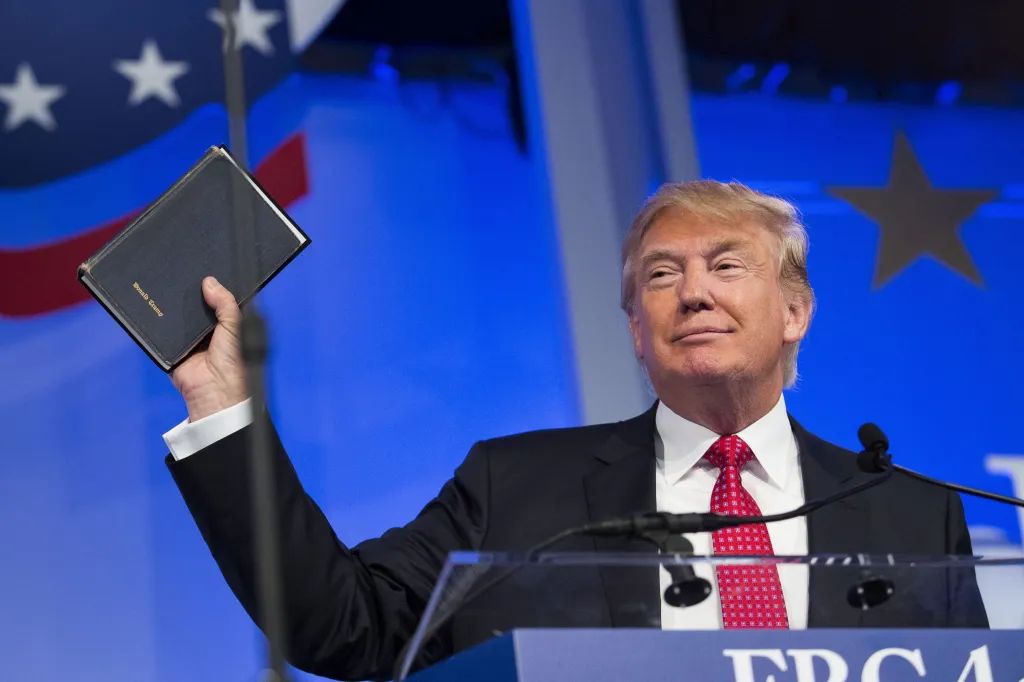
Trump certainly claims to be a Christian and also to read and love the bible. Does that public profession of faith make Trump a Christian? Let’s look at two others before we circle round to answer this question. Firstly George Washington (1732-1799) and secondly Martin Luther (1483 – 1586).
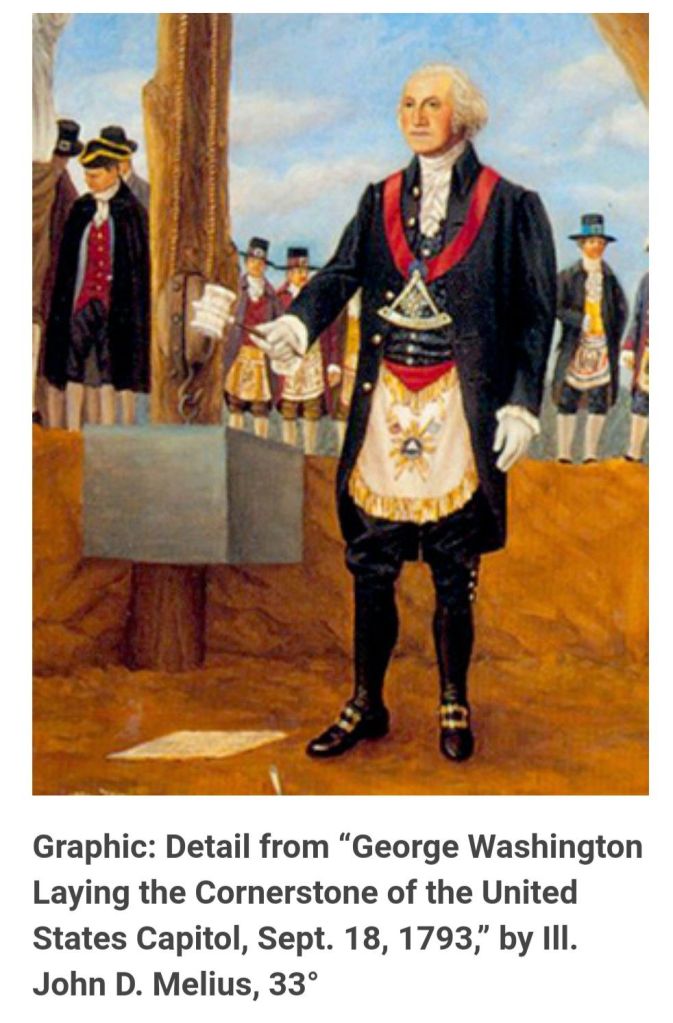
George Washington very much like my ancestor, General Daniel Morgan honed his warfare skills killing Native Americans and subsequently leading the continental army to significant victories against the British in the War of Independence culminating with him being put forward as the first President of what was to become the United States of America. George was a slave owner (as was Morgan *) until his death. He was a Freemason from the age of 20. He was baptised as a baby. He was a ‘good church going Christian man’ his whole life attending services in a variety of denominations. For example, in the seven Sundays during the First Continental Congress (5th September to 26th October, 1774) in Philadelphia, he went to church on three occasions, attending Anglican, Quaker, and Catholic services.
When acquiring workmen for Mount Vernon, he wrote to his agent, “If they be good workmen, they may be from Asia, Africa, or Europe; they may be Mohammedans [Muslims], Jews, or Christians of any sect, or they may be Atheists.”
In 1790, Washington expressed his support for religious tolerance in a letter to the Hebrew Congregation in Newport, Rhode Island as follows:
‘The Citizens of the United States of America have a right to applaud themselves for having given to mankind examples of an enlarged and liberal policy — a policy worthy of imitation. All possess alike liberty of conscience and immunities of citizenship. It is now no more that toleration is spoken of as if it were the indulgence of one class of people that another enjoyed the exercise of their inherent natural rights, for, happily, the Government of the United States, which gives to bigotry no sanction, to persecution no assistance, requires only that they who live under its protection should demean themselves as good citizens in giving it on all occasions their effectual support.’
The separation of the United States of America from the British Empire led very quickly to the separation of the Church of England congregations in the US from King George III, as their head, and just as quickly to the ordination of ministers of the American version of the Church of England, which became known as the Episcopalian Church. This crisis in hierarchy and church leadership structures had a ripple effect on all the other Protestant denominations and it was during this time that one James O’Kelly originally from the Presbyterian Church wrote extensively on the topic of congregational autonomy. It was also into this melting pot and proliferation of ecclesiastical views that Thomas and Alexander Campbell studied out infant baptism and came to the conclusion that led to them being excommunicated from the Baptist Church and beginning the Restoration Movement that the ICC is a part of.

So here we see the views that a pluralistic George Washington held, having a knock on effect on church governance in the United States, which set the stage for the birthing and growth of the Restoration Movement which numbered approximately 3 million members, mostly in the United States by 1900. What we can understand from this cathartic change in world power from 1775 onwards, is that the pluralism of the Freemason movement (for the purposes of gathering and maintaining wealth amongst the wealthy in human society) led to conditions that benefited the spread of the gospel for the 250 years thereafter, right up until today, as the 1960s saw revival in the mainline churches, followed by the 1970s in the ICOC and from 2004 in the ICC. The ripple effect of the leadership of George Washington is being felt today in spite of the fact that he was a slave owning, Freemason, who didn’t subscribe dogmatically to any denominational view. His pluralistic toleration however, allowed the Anabaptist doctrine to take root firmly in his generation via the Campbells and it has lasted until now. One can see Washington spoke aggressively against persecution. This persecution had certainly been what had harmed the Anabaptist movement in previous centuries. This brings us neatly to Mr Martin Luther.
What of Martin Luther? Martin Luther is often held up as an example of a righteous Catholic monk who visited Rome and became indignant with the excesses of wealth and debauchery perpetuated by the catholic hierarchy in Rome. The 95 theses that he wrote are largely understood as outrage at the sin that he saw in Rome. But if one looks at the methodology that Luther used to secure the Reformation and afterwards re-reads the 95 theses one may see things through different coloured spectacles. In 1515 he was promoted by the Catholic church to oversee 11 monasteries in his region. On 31st October, 1517 Luther allegedly posted the 95 thesis. In 1518 ‘friends’ translated the theses to German and spread them widely in Germany and then in 1519 to France, England and Italy. And in 1520 Luther played his Ace card. He recruited members of the German nobility, who were essentially members of government in their political system, to join his cause via a letter. He addressed it to his King, Charles V (who never paid the slightest heed to any of Luther’s theology and remained loyally Catholic until his death) and also to the German Nobles. It was among the Nobles that Luther secured his political power and his method for reformation that was copied in the other European countries thereafter: namely to reform the church using the state. This basically amounted to the formation of multiple sectarian theocracies. Even in 1521 Luther had secured the protection of the Saxon princes, Frederick the Wise (1483 – 1525) and his brother John the Constant (1468 – 1532). It was January of that year that he was condemned as a heretic by Pope Leo X (Giovanni di Lorenzo de’ Medici). Luther might never have escaped the sentence of burning reserved for heretics by the Pope and King Charles V had he not been spirited away by the nobles. The previous August 1520 Luther had written his letter to the King and nobles explaining how ‘the Germans should be masters’ and setting forth his fiscal policy to keep German money from being passed to the pope. It was a master stroke of political genius!
But where was Luther’s pen and paper, when the pacifist Waldensian preachers Hans Koch and Leonhard Meister were put to death in Augsberg, Germany in 1524? Augsburg, where Luther spoke so boldly and at length in 1518 and 1530 in defense of his ‘politics’. No rebuttals for murdering the poor sheep of Christ! No speech for the beheaded disciple Leopold Schneider also sentenced and executed (after forgiving those killing him) in Augsburg 1528. Luther had no conviction to protect any heretics save himself and those who followed his politics. Clearly, the Waldenses and Anabaptists could go to hell! Was Luther outraged when George Wagner’s wife and child were brought into the German prison cell in Bavaria in 1527 and the prince used them to try to get him to recant? Wagner was brought to the stake in great and joyful steadfastness and burned to death on 8th February 1527. Where was Luther’s bombastic pageantry when on 21st May 1527 in Rottenberg Germany, Michael Sattler was found guilty of rejecting infant baptism (quoting 1 Pet 3:21, Mk 16:16 at his trial), had his tongue cut out, had his body torn with red hot tongs, brought out into the place of execution, pinched five more times with the red hot tongs and then burned alive! Where are Luther’s verbose expressions when the brave Mrs Sattler was pressured for three days after her husband’s execution, and then drowned. Michael stated clearly in his defense ‘that the Lutheran doctrine and delusion is not to be adhered to, but only the Gospel and the Word of God.’ Of course Luther and his princes of politics did not come to his defense!

Finally, from his seared lips, the crowd standing by heard him say, “Father, I commend my spirit into Thy hands.” Then he joined the Savior in death that he had served in life.
It is interesting that the horrific deaths of the Sattlers was concurrent with the outbreak of Plague that infested Wittenberg and Luther himself was not only one of it’s first victims but was subsequently inwardly plagued with severe Acedia for a prolonged period.
In a letter to his friend Melanchthon on 2nd August, 1527, Luther wrote:
‘I spent more than a week in death and hell. My entire body was in pain, and I still tremble. Completely abandoned by Christ, I labored under the vacillations and storms of desperation and blasphemy against God.’
Luther was soon back to his politics, writing furiously, but not in defense of the noble army of martyrs executed for their beliefs on baptism. He travelled to meet the Swiss Reformer Ulrich Zwingli in 1529. Zwingli had already worked with the Swiss Governors to execute the Anabaptist, Felix Manz in 1526 (previously a reformer in Germany, and executed as an Anabaptist by drowning). Luther’s visit was fruitful by all accounts where he and Zwingli disagreed on little. The sweet fellowship of these two ‘spiritual giants’ did little however to save the Anabaptist ministers George Blaurock and Hans Van Der Reve, both burned in Zurich that same year, but not before explosive growth in their ministry.
Matthew 7:6
“Do not give dogs what is sacred; do not throw your pearls to pigs. If you do, they may trample them under their feet, and then turn and tear you to pieces”
How many more thousands of stories need to be juxtaposed between the politicking of Martin Luther and how little he did during his lifetime, to change the state of affairs all over the Holy Roman Empire including Germany, Moravia, Bohemia, Austria and all over the Netherlands where thousands of innocent disciples had their property confiscated and were imprisoned, tortured in many cruel ways, burned, beheaded and drowned. Europe was rife with the executions of the army of noble Martyrs and poor sheep of the congregation of Christ, and had been, since the very beginning, and in every century. This was first of all at the hands of the Romans, and then the Roman Catholics, and finally at the hands of the Protestants. I have already written about the executions of Simon Fish (who translated to English the German Anabaptists book ‘The Summe of Holy Scriptures‘) and James Bainham in England in 1531. This cruelty was the practice of Catholic, Orthodox and Protestant ‘christians’, all over Europe and in every century up until the 1660s since the beginning.
So we see that with Martin Luther’s politics he did not create a pluralist society and yet the executions that he allowed to continue only served to spread the gospel further and right up until the 1660s. I have already attested to the presence of many Anabaptists in England in the 1600s in my article about the persecutor and minister of the Protestant church in England, Daniel Featley.
Now understand that the pluralist George Washington created a state in which the movement of the disciples, and their making more disciples, thrived for hundreds of years, and the persecution aside the sectarian Martin Luther, in its own way, led to the spread of the gospel. We see the characters of two famous and powerful men being used in two completely different ways to further the spread of the gospel, one through liberalism and the other through persecution. And so we come back around to the question of whether or not Donald Trump is a Christian. Well if we look at history, we see Luther and Washington held bibles in their hands and professed to believe in God. We can also see the fruit of their deeds and we can also see what was going on around them and how they were involved in it. The truth is that Donald Trump, picking up a Bible and telling the world he’s a Christian, is of absolutely no consequence to what disciples believe. Whether or not he creates conditions in the United States and further afield in the world, where disciples have advantages financially or opportunities for evangelism, or whether he creates a limited pluralism that excludes true disciples, slandering them and trying to impede the spread of the gospel matters not! One way or another the gospel will spread. And that is good news! Let’s pray for the souls of both Trump and Harris.

FOOTNOTE : It is interesting to note here that Luther not only referred to the Germans as ‘the master’ race in his letter to the German nobility but he also wrote an extensive document entitled ‘The Jews and their lies’. Luther’s writings were used by the Nazis in the 1930s to justify anti-semitism and the Arian belief system.
* It is only right that I make some small comment on the slave master that was my great, great, great, great, great, grand uncle, General Daniel Morgan. My late aunt who was herself a Catholic Dominican nun, wrote a book entitled ‘The Morgan Legacy’ where she describes this ancestor of mine as ‘energetic and enterprising and considered a shrewd businessman’ and she describes his farming in ample detail but does not mention once, the ten African slaves that he kept in bondage on his plantation. It is a great shame that this happened and that my family in America benefited from this and an even greater shame that this fact was omitted from a book that detailed his life extensively. I am setting the record straight.
Bible Study on using political power for biblical ends.
Isaiah 30:1-5
Woe to the Obstinate Nation
“Woe to the obstinate children,” declares the Lord, “to those who carry out plans that are not mine, forming an alliance, but not by my Spirit, heaping sin upon sin; who go down to Egypt without consulting me; who look for help to Pharaoh’s protection, to Egypt’s shade for refuge. But Pharaoh’s protection will be to your shame, Egypt’s shade will bring you disgrace. Though they have officials in Zoan and their envoys have arrived in Hanes, everyone will be put to shame because of a people useless to them, who bring neither help nor advantage, but only shame and disgrace.”
John 6:15
Jesus, knowing that they intended to come and make him king by force, withdrew again to a mountain by himself.
 Morganite's Blog