
One piece of good news received from GNN (Good News Network) recently resets Ground-Zero for the International Christian Church to June 1946 I believe… Just over 80 years after the death of Alexander Campbell! A woman who was baptised in 1946 placed membership from a mainline church of Christ in the Fall 2021. This is highly significant for me, as our studies and teachings in the ICOC on the history of the mainline churches of Christ highlighted the revivals of the 1960s as the main reasons for the birthing of the ICOC. Ground Zero for us, had already been reset two years ago when we understood that since baptisms in 1967 approximately 2000 members of the mainline churches of Christ had joined the ICOC swelling it’s ranks with mature, trained, experienced, disciples. Now we know that even decades before the popular revivals of the 1960s (which were occurring in many churches that did not have the true gospel) there were disciples being baptised in the US. It is very faith building to think about there having been disciples in every decade since the 1820s when Ulstermen, Thomas and Alexander Campbell started the Restoration Movement.
This also gives new emphasis to the mainline churches in Haiti that have already joined the ICC and the new work, recently reported underway in the Philippines. By God’s grace the ICC will number 10,000 in a few short months. Many churches pride themselves in the fact that they can look back at previous generations and see that their teachings were being propagated in various parts of the world. It gives people a sense of legitimacy to know their teachers have been around for some time. I guess this is where my own fascination with Church History comes from. Looking back I have been able to find different groups that have had the same teachings on baptism as all the branches of the restoration movement since the 1820s including the ICOC and ICC. This includes the anabaptists of the 15th and 16th centuries. Looking at the historical spread of the gospel, the question comes quite easily therefore, ‘Did Christianity spread to England in the 1st century?’. The farther back you look often times the less evidence there is. I too have wondered if it would be possible to find anything.
The words of the Hymn ‘Jerusalem’ (1808) come from a poem written by the English Painter, William Blake. They go as follows.

Jerusalem
And did those feet in ancient time, Walk upon England’s mountains green:
And was the holy Lamb of God, On England’s pleasant pastures seen!
And did the Countenance Divine,Shine forth upon our clouded hills?
And was Jerusalem builded here, Among these dark Satanic Mills?
Bring me my Bow of burning gold;Bring me my Arrows of desire:
Bring me my Spear: O clouds unfold!Bring me my Chariot of fire!
I will not cease from Mental Fight,Nor shall my Sword sleep in my hand:
Till we have built Jerusalem,In England’s green & pleasant Land
The poem asks four questions. The first asked if the movement of Jesus’ disciples made it as far as the shores of England in the 1st century. One of the later questions asks about whether the true church was present in England during the Industrial Revolution (a question for another day). I set out some years ago to investigate various historical sources and determine whether there is any evidence to support the idea that true Christianity did in fact come to England in the 1st century. This article details my findings. I do indeed believe it is entirely possible given this evidence, that there were true christians in England in the first century. First of all, the book of Colossians quite clearly states that ‘every creature under heaven’ had, had the gospel proclaimed to them in the first century (Col 1:23). The prophesy about the Kingdom of God in Isaiah chapter 2 verses 1 through four, foretells that All Nations would stream to the mountain of the Lord’s temple (Isa 2:1-4). Prior to my research I’d already heard that it was possible that Christianity came to England through the Roman army in the first century. I therefore started to look for cheap books on the Roman invasion of Britain in bookshops in Central London.

The first attempted Roman invasion of Britain failed in 55-54BC. It had been preceded by kings of Gaul fleeing to Britain to avoid arrest by Roman opponents and Roman emissaries being sent to Britain and taken hostage. These legions who attempted to invade with Julius Caesar failed. Caesar Augustus subsequently planned invasians in 34BC, 27BC and 25BC but all three were aborted. Roman trading forts have recently been found in the South Coast of England dating to 16AD and 30 AD showing the ongoing relationship between the Empire and those beyond its actual borders. This latter dated Fort coincides with a small repentance movement within the Roman army scant details of which emerge in the details of the ministry of John the baptist.
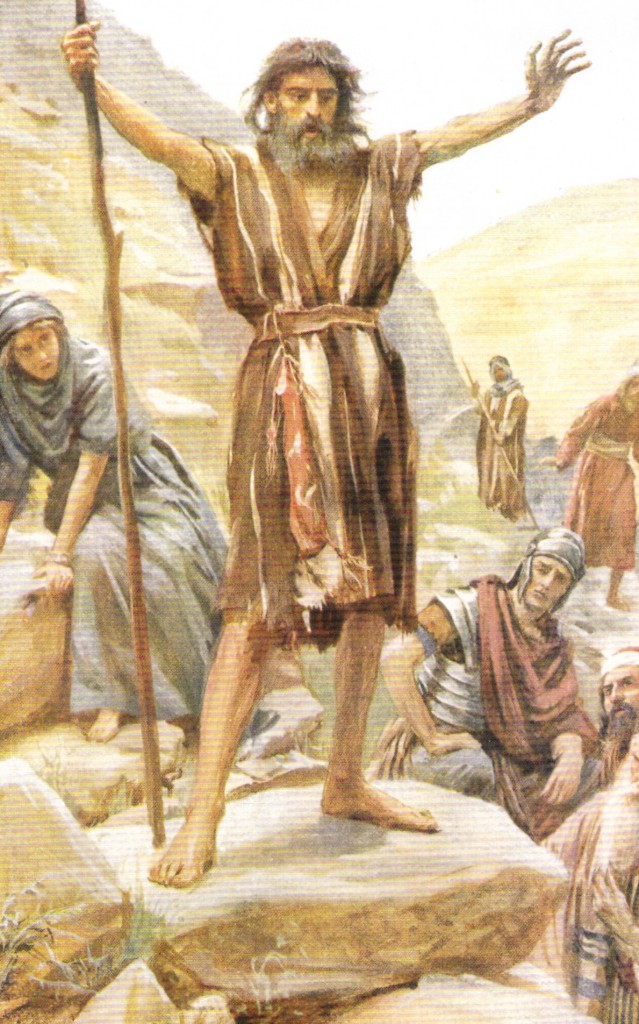
Luke 3:14 Then some soldiers asked him, “And what should we do?” He replied, “Don’t extort money and don’t accuse people falsely—be content with your pay.”
It is of considerable interest to me that the teachings that the soldiers received did not include desertion or going against the strategic commands of the army generals. The Roman army was an occupying army and they were hated by the Jews so it is immediately obvious and very interesting that John did not tell the soldiers that they had to leave the Army or desist from obeying kill orders. Instead he in fact reinforces their professionalism as soldiers by giving them specific teachings in relation to remaining in the army. The first set of teachings has a downward focus in terms of how they treat the people that they were occupying. Clearly, Roman soldiers were very prone to commit war crimes against civilians. The second half of the passage above shows a command focussed upwards in direction in terms of their relationship with their commanders. They were given much the same command as slaves in the sense that they were instructed in such a way as to make the jobs of their commanders easier. They would most likely have stood out within their legions as men who did not complain against the officers and against the Roman government. They would have been seen as loyal citizens but also as soldiers who were trustworthy in building rapport with the civilian population and therefore keeping the peace, men careful enough to handle situations with civilians with prudence, impartiality and sensitivity.
37AD saw the convertion of the Apostle Paul, Apostle to the Gentiles and his 3 years in Arabia and Tarsus.
It is no surprise therefore, that just over a decade after soldiers were seen in John’s ministry that we find high ranking officers in the Roman army who were already believers in Yahweh and now converting to be disciples of Jesus. The following account gives full details of one such conversion involving multiple soldiers in 41AD.
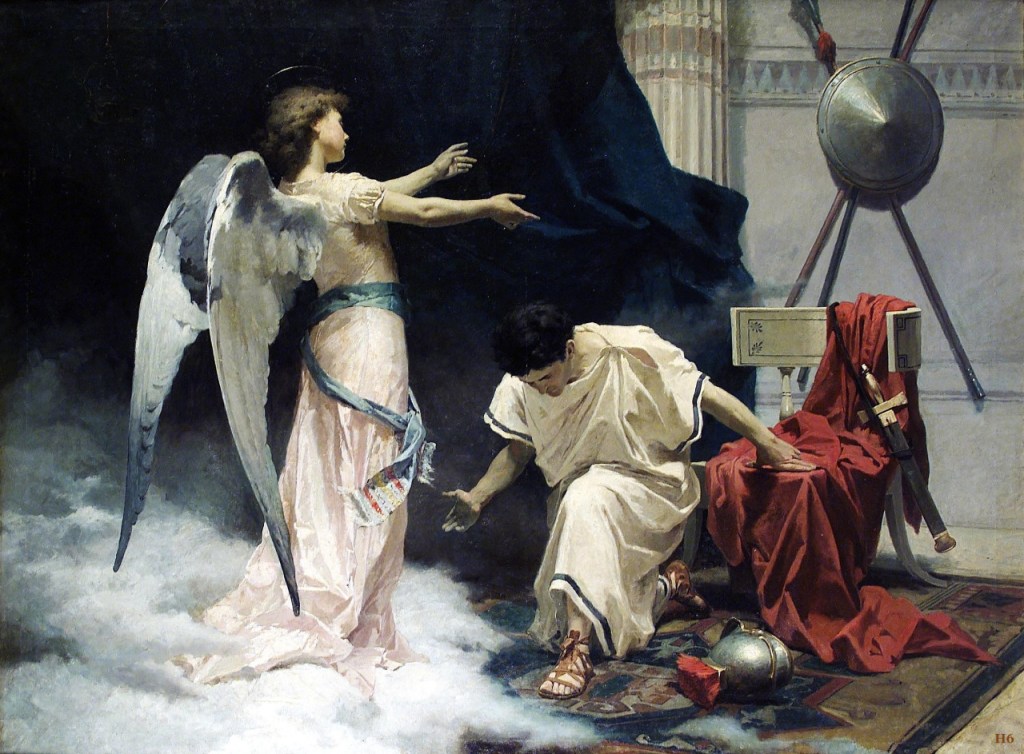
Acts 10:1,4-8,23-24,44,47-48
Cornelius Calls for Peter
1 At Caesarea there was a man named Cornelius, a centurion in what was known as the Italian Regiment. 4-8 Cornelius stared at him in fear. “What is it, Lord?” he asked. The angel answered, “Your prayers and gifts to the poor have come up as a memorial offering before God. Now send men to Joppa to bring back a man named Simon who is called Peter. He is staying with Simon the tanner, whose house is by the sea.” When the angel who spoke to him had gone, Cornelius called two of his servants and a devout soldier who was one of his attendants. He told them everything that had happened and sent them to Joppa. 23-24 Then Peter invited the men into the house to be his guests.
Peter at Cornelius’s House
The next day Peter started out with them, and some of the brothers from Joppa went along. The following day he arrived in Caesarea. Cornelius was expecting them and had called together his relatives and close friends. 44 While Peter was still speaking these words, the Holy Spirit came on all who heard the message. 47-48 “Can anyone keep these people from being baptized with water? They have received the Holy Spirit just as we have.” So he ordered that they be baptized in the name of Jesus Christ. Then they asked Peter to stay with them for a few days.

We see here that not only Cornelius but one of the men under his command was a devout soldier. This is a clear indication that there were soldiers in the Roman army who had become believers in the God of the Hebrews. This is clearly linked to the influence and teaching of John the Baptist further expanded in Jesus ministry (Mt 8:5-13). Even prior to the ministry of the Messiah, Roman soldiers found the teaching of Yahweh’s greatest prophet irresistible! By 41AD it had spread in their ranks to the point that their officers were impacted. Disciples were spreading in the Roman army right at the beginning of the movement. This same army had, had its greedy and ambitious eye on Britain already for 90 years. Political pressure and military ambition grew steadily. The main invasion force under Senator, Aulus Plautius crossed The British Channel in three divisions in 43AD.
The invasion force is estimated at 40,000. In the entire army of an estimated 250,000 men this constituted an investment of 16% of the Army. The question is, ‘Is it possible that soldiers converted between 41AD and 43AD were in the legions that invaded?’. No records exist. However, I have personally seen an inscription on a tombstone in Bath (Roman Town in the UK) of a soldier transferred between legions and I understand that this was something that happened in the Roman army just like any other Army. There are different possible scenarios that could have resulted in Christian Soldiers being a part of the invading Force with Senator Aulus Plautius. Firstly, soldiers or officers or groups of soldiers could have been transferred into legions that were included in the invasion force at any point during the two previous years. Alternatively, other soldiers could have been converted in other legions in similar circumstances to those of Cornelius (involving visions and Angels and short Missionary Journeys). In any case 2 years had past since the New Testament relates the conversion of multiple Roman soldiers.

Senator, Aulus Plautius became the first governor of the new province of Britain, serving from 43 to 47AD. During this three or four-year period it was reasonable that such a high-ranking politician had his family in residence and would have kept them secure and under guard at all times. This is even more likely when we understand that Plautius’ wife’s cousin was executed by the emperor Claudius in 43AD after the emperor’s wife accused her of incest! Tacitus records how Plautius’ wife was seen to have mourned the death of her cousin by wearing morning clothes, practically for the rest of her life, which would have been an affront to the emperor. In such circumstances, being far away from Rome would have been quite desirable!
Tacitus records a strange occurrence that happened approximately 10 years after Plautius and his wife return to Rome. In 57 AD Pomponia Graecina (Wife of Governor Aulus Plautius Silvanus) was accused of serious misconduct as a woman who had succumbed to a foreign superstition. She was apparently tried by a family council headed by her husband and found innocent. (Tacitus Annals xiii 32). This was some 8 years after the Apostle Paul had written his epistle to the Romans. What are the chances that such a prominent woman in Roman Society in the capital city of Rome could have been converted to Christianity at that time? There are already numerous cases of prominent women being converted throughout the Book of Acts. The elevation of women in Jesus ministry had the natural consequence of inspiring women from many different backgrounds and of high-rank in society to join the 1st century movement (Luke 8:1-3).

In 49 AD Paul wrote,
Romans 16:23 Gaius, whose hospitality I and the whole church here enjoy, sends you his greetings. Erastus, who is the city’s director of public works, and our brother Quartus send you their greetings.
This account of a high-ranking Roman official being converted to Christianity some 8 years prior shows how entirely possible it was that Pomponia Graecina could have been influenced by these other Roman citizens to convert. It is just as likely that she was already converted at this point and used her influence to reach out to these other influential men. There is an interesting question as to when she was converted. Here is where I will draw together all the strands of historical evidence and suggest my theory. I put forward that Roman soldiers were indeed in the invading force. I suggest to you that Pomponia Graecina was brought to the island of Britain to live with her husband and somehow came into contact with christian soldiers and recognised their distinctive character as opposed to that of the general members of the army who were oppressing the local people. This may have come to her attention particularly when she saw how they treated the women. She may have become so impacted by this that she converted in Britain. It may be that seeds were planted in Britain by these Christian soldiers and that she was not baptised until she came back into Rome at some point and was then approached and reached out to by people within her ranks in Roman society. Personally, I believe it more likely she may have been converted in Britain. I say this because Tacitus says that she was accused of having a foreign superstition. She had lived in Britain for some time and this would have been the logical place for her to have picked up a foreign superstition. I put it to the reader that the only reasonable foreign superstition that could have existed in Britain at that time that would have been taken up by a high-ranking Roman lady would have been that of becoming a follower of Jesus. In addition to this Pomponia must have been horrified and outraged at the execution of her friend and cousin by the Emperor and would no doubt have been struggling to believe that the emperor was someone to be worshipped. With this mindset she would have been much more open to converting and taking the risk of persecution. Her actions afterwards for the rest of her life until her death in 87AD show that she had no fear of the consequences of her actions when it came to doing the right thing. This looks and sounds like someone who is prepared to die for their faith. This looks and sounds just like a disciple.
Throughout the history of the early Church we see men and women at the right time and in the right place to be used by God. It is incredible to see God work through world events to see His will be done.. even the evangelisation of the Nations in our generation!
 Morganite's Blog