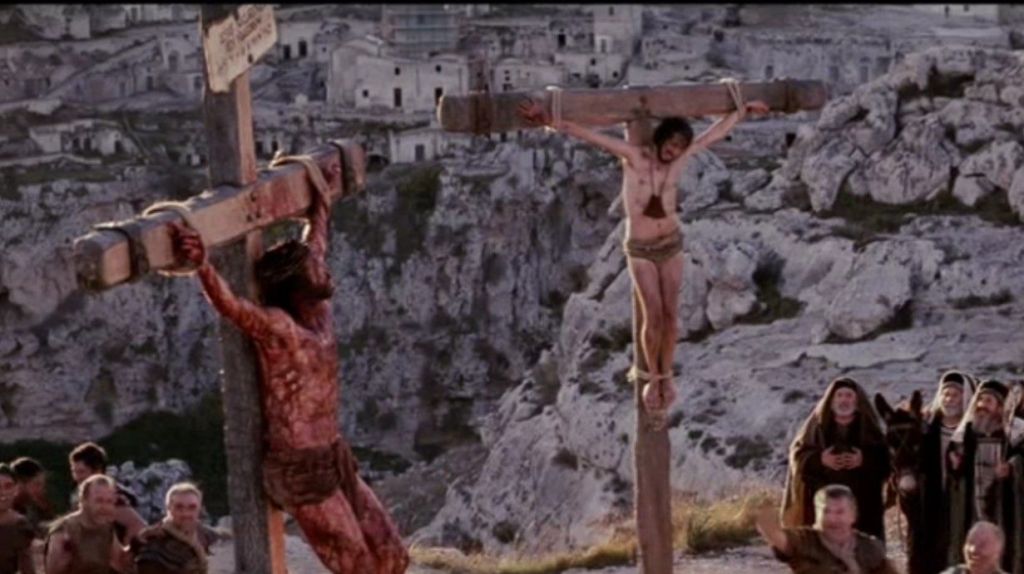
No thief remembered—faithful soul who chose the truth and chose to die.
There is something quietly troubling, almost indecent, about the way we habitually refer to the man crucified beside Jesus as “the thief on the cross.” The phrase rolls easily off the tongue, repeated in sermons, books, and casual conversation, as though it were his proper name. Yet in doing so, we reduce a man’s final, defining act of faith to the label of his past wrongdoing. We freeze him in the moment of his crime rather than in the moment of his transformation. It is worth asking, is this how Scripture itself remembers him, or is this how we have chosen to remember him?
The Gospel of Luke gives us the most complete account. There, he is not even called a thief, but a “criminal”, one of two who were crucified alongside Jesus. The distinction matters less than what follows. For while one of the criminals joins in mocking, the other rebukes him. In the midst of unimaginable agony, he speaks words that reveal clarity, courage, and conviction: “Do you not fear God, since you are under the same sentence of condemnation? And we indeed justly… but this man has done nothing wrong” (Luke 23:40–41). These are not the words of a man defined by his past. These are the words of a man who sees clearly, perhaps more clearly than many who stood at the foot of the cross.
And then comes the extraordinary moment. Turning to Jesus, he says, “Jesus, remember me when you come into your kingdom” (Luke 23:42). This is not a vague hope. It is a confession of kingship spoken to a dying man who appears, outwardly, to be utterly defeated. The crowds see a failed messiah. The authorities see a criminal justly executed. But this man, this unnamed, condemned man, sees a king. In that moment, his faith shines with a purity rarely matched in the Gospels. He asks for no rescue from the cross, no reprieve from suffering. He asks only to be remembered.
It is difficult to overstate what this cost him. Crucifixion was not merely a method of execution; it was a prolonged ordeal designed to break both body and spirit. Victims were nailed or tied to a cross, forced to push up against excruciating pain in order to breathe. Each breath was a struggle. The body weakened, muscles cramped, lungs filled with fluid. Death often came slowly—through exhaustion, asphyxiation, and shock. There was no dignity in it, no comfort, no relief. To speak at all required effort; to speak with clarity and purpose required resolve.
And yet he speaks—not to complain, not to curse, but to defend Jesus and to confess faith in Him. He rebukes the other criminal, acknowledges his own guilt, declares Jesus’ innocence, and entrusts himself to Jesus’ future kingdom. He does all this while enduring the same agony as the one beside him.
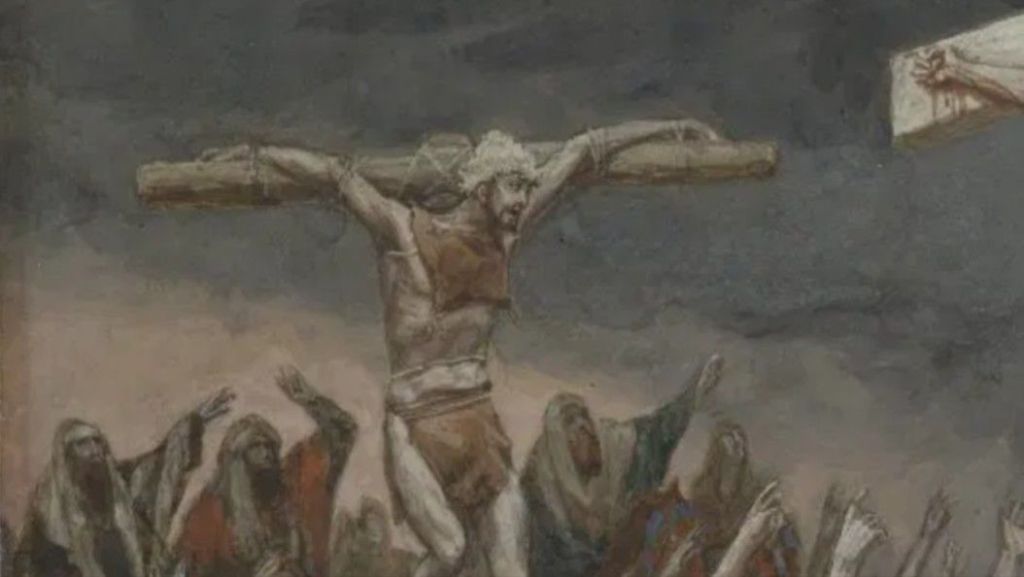
If we are honest, many of us would struggle to form coherent thoughts under such suffering, let alone articulate a theological confession. But he does more than articulate it, he lives it, in the final hours of his life.
It is here that the title “thief on the cross” feels especially inadequate. It points backward, not forward. It highlights what he was, not what he became. It ignores the fact that, in those final moments, he became something remarkable: a disciple. Indeed, he is the only person recorded in Scripture who comes to faith during his own crucifixion and remains faithful until his death, which follows shortly after. There is no time for a long life of discipleship, no opportunity for public ministry, no chance to prove himself over years. But there is this: a moment of genuine, costly faith that endures to the end of his life, however brief that remainder may be.
There is also a doctrinal dimension worth noting. This man dies before the events that inaugurate the new covenant in their fullness. Jesus has not yet died, been buried, and risen. The outpouring of the Spirit at Pentecost has not yet occurred. In that sense, his conversion belongs to a transitional moment, perhaps among the last before the new covenant is publicly established. And yet, like others who preceded him in Jesus 3 year ministry, even here, the essential elements are present: recognition of sin, acknowledgment of Jesus’ Lordship or confession of His Kingship, and a personal appeal for mercy. Jesus’ response is immediate and astonishing: “Truly, I say to you, today you will be with me in paradise” (Luke 23:43). There is no hesitation, no qualification, only assurance.
This raises an uncomfortable question for us. If Jesus Himself responds to this man with such affirmation, why do we persist in naming him by his crime? Why do we not call him by his faith? Why do we not remember him as “the faithful one,” or “the crucified believer,” or “the penitent disciple”? Names matter. They shape memory. And when we repeatedly call him “the thief,” we subtly reinforce the idea that his past defines him more than his faith.
Perhaps it is time to consider better titles. “The Crucified Disciple” captures both his suffering and his allegiance. “The Penitent Believer” highlights his repentance and trust. “The Man Who Saw the King” reflects the remarkable insight he displayed at the very moment others failed to see. Any of these would do more justice to the narrative than the tired label we have inherited.
But beyond titles, there is something deeply moving, almost overwhelming, about the encounter itself. Here is Jesus, at the center of His own suffering, enduring the physical and spiritual weight of crucifixion. And yet He is still attentive to the individual beside Him. He still hears. He still responds. He still saves. There is a quiet majesty in this: the one Christians confess as the highest authority in the universe, humbled to the point of execution, yet still exercising compassion and authority in the midst of agony. He does not withdraw into His suffering. He ministers through it.
And the man beside Him, he, whatever we choose to call him, responds with a kind of heroism that is easy to overlook precisely because it is so quiet. He does not perform a grand act. He does not escape his fate. But he speaks truth when it would have been easier to remain silent. He defends an innocent man when others mock. He places his hope in a kingdom he cannot see. And he holds that hope until his final breath. There is courage here, and clarity, and faith, compressed into a brief but luminous moment.
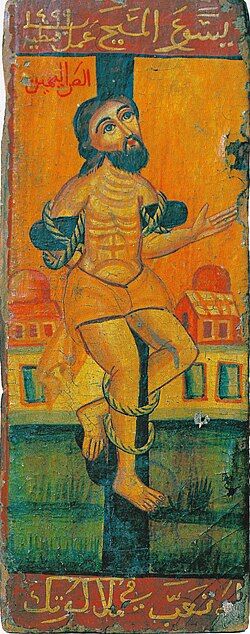
In modern life, we are often quick to define people by their worst moments. A single failure, a single mistake, can become the label that follows them. We speak of “offenders,” “addicts,” “failures,” as though these categories exhaust the person. But the story of this man challenges that instinct. It reminds us that a person’s final turn, toward truth, toward repentance, toward faith, can be more significant than all that came before. It invites us to consider whether we, too, might be misnaming people, reducing them to what they were rather than recognising what they have become.
How dare we call him ‘The Thief’. How dare we say he was saved by faith alone or claim to have a faith like his in a simple quiet moment at the alter of a steeple house. In those final hours, suspended between earth and sky, this crucified disciple did more than believe, he acted. With lungs strained and body failing, he rebuked the other criminal, defended an innocent man, confessed his own guilt, and proclaimed the kingship of Jesus. Each word cost him breath; each sentence required strength drawn from a body collapsing under pain. Yet he spoke. This was not passive faith. It was faith expressed, faith embodied, faith doing what it could in the narrow space left to it.
His suffering did not produce despair but clarity. While nails held him in place, his mind and heart reached beyond the cross to a kingdom he could not see. In the very moment when pain might have silenced him, it instead sharpened his resolve. He did not wait for relief to believe; he believed in the absence of it. He did not wait for proof; he recognized truth in a crucified king.
Here, faith and action are inseparable. His confession, his defense of Jesus, his humble plea, these were his works, forged in agony and offered in trust. And in that union of suffering and obedience, he stands not merely as one who believed, but as one who lived out his faith to the very end. He is living proof that had the Apostles not fallen away they may well have been crucified too. It would not have been impossible

