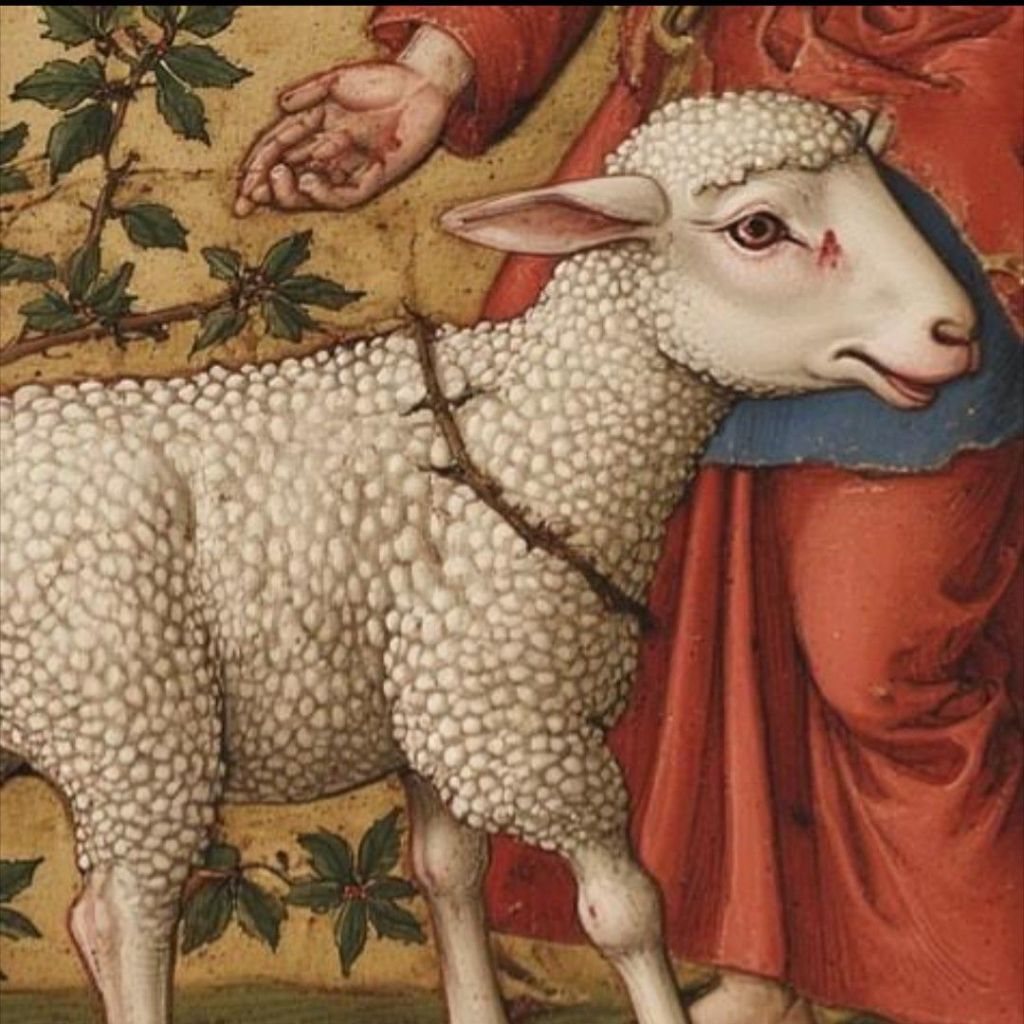
Gen 21
As a consequence of Abraham accepting Sarah’s offer (Gen 16:2) he now has children and wives in discord. Then as a result of his agreement with Sarah’s solution God works around it but it looks so harsh as Hagar sets out. There is a pit in my stomach around the cumulative consequences of Abraham’s decisions on his family. His covenant with Abimelech the Philistine is interesting. I wonder if God is still honouring it to this day in spite of the geopolitics!
Then Gen 21. In light of the revelation to the Hebrews writer.
Hebrews 11:19
Abraham reasoned that God could raise the dead, and figuratively speaking, he did receive Isaac back from death.
The first recorded resurrection in scripture is in 1 Kings 17:17–24. Therefore Abraham’s faith did not rest on what he knew from history or experience.
Romans 4:19
Without weakening in his faith, he faced the fact that his body was as good as dead—since he was about a hundred years old—and that Sarah’s womb was also dead.
We might miss that Abraham had already experienced a resurrection of he and Sarah. We might underestimate the power of that internal regeneration of Sarah’s womb but it was not lost on Abraham. God could heal a dead womb. God could bring Abraham or himself or his son Isaac back from the dead. Abraham trusted God with Isaac’s life quite literally. In spite of his terrible decisions he feared God and knew God would keep his promises.
How many miracles of God am I ignoring? What sacrifice is next so that God can bless me immeasurably more than I can imagine? This is the scariest kind of faith that Yahweh wants because he has such a strong desire to bless.
Jer 29:11
——-
My QT on Gen 23 & 24
Genesis 25
When God gave Abraham the promise,
Genesis 13:16
I will make your offspring like the dust of the earth, so that if anyone could count the dust, then your offspring could be counted.
God does not limit this to the messianic line of Isaac an indeed the promise given to Hagar shows that this was the case.
Genesis 16:9-10
Then the angel of the Lord told her, “Go back to your mistress and submit to her.” The angel added, “I will so increase your descendants that they will be too numerous to count.”
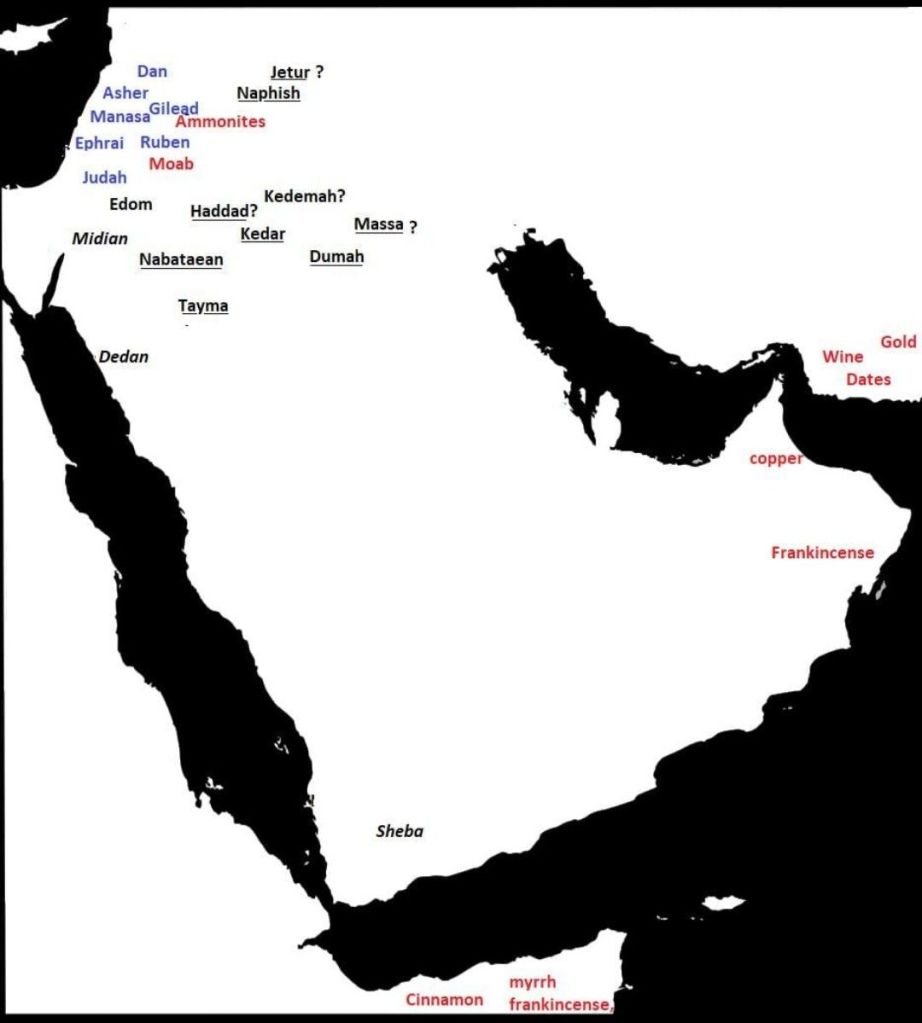
The sons of Abraham in Genesis are associated in later tradition with specific modern peoples and tribal confederations.
Through Isaac, via Jacob (Israel), descend the Jewish people. Modern Jewish populations include Ashkenazi, Sephardi, Mizrahi, Yemenite, Kurdish, and Ethiopian (Beta Israel) communities, all covenantally tracing lineage through Israel. The Samaritan community also claims descent from the northern tribes of Israel.
Through Ishmael, Islamic and Arab genealogical tradition identifies numerous Arab tribes as “Adnanite” (northern Arab) descendants. These include Quraysh (the tribe of Muhammad), Banu Hashim, Banu Umayyah, Banu Tamim, Banu Khalid, the Anazzah confederation, Shammar, Otaibah, Harb, Mutair, and sections of the Rashaida. Many Hejazi and Najdi Arab tribes in Saudi Arabia and Jordan trace lineage through Adnan to Ishmael.
From Midian (son of Keturah), traditions connect tribes historically located in northwest Arabia and southern Jordan. Sheba is linked in Arab historiography to Yemeni Qahtanite tribes such as Himyar and Kahlan, though these genealogies differ from Ishmaelite lines.
Modern genetic research shows broad shared Near Eastern ancestry among Jews and Arabs but does not confirm specific descent from individual biblical patriarchs.
The estimated total population of Abraham’s descendants based on physical claimed tribal links (including the Jews) is 1.6 to 2.6 billion people! This does not include those spiritual children of Abraham.
Galatians 3:7
Understand, then, that those who believe are children of Abraham.
One can draw estimates from 53–67 million individuals cumulatively representing anabapist sects.
This total reflects all Christians historically identified with:
Early house-church Christians (pre-Constantine)
Medieval non-state / purity-focused sects,
Anabaptist proper movements and Restoration movements. The number of true believers in these estimates will highly likely be a lot less than the totals.
The spiritual children of Abraham would therefore be lesser than the physical!
But we have a chance to evangelise a world of currently 8.27 billion people!
——-
In Genesis 20 to 32 I was struck by the contrast between Abimelech and Jacob/Israel.
Backstory.
Abimelech (Abraham) vs. Jacob and another Abimelech of Gerar (Genesis 20–21; 26). (Abimelech in Hebrew means (Father of the King – a title rather than a name).
These men are portrayed as pagan kings who nevertheless both respond rightly to divine warning. In Genesis 20:3–7, God confronts the first in a dream over Sarah. Abimelech pleads his integrity (20:4–5), and God acknowledges that he acted in innocence (20:6). He restores Sarah publicly (20:14–16) and seeks Abraham’s prayer (20:7, 17). Later, recognizing God’s blessing on Abraham, he initiates a covenant of peace (21:22–24).
In Isaac’s day, Abimelech (a political equal to the first Abimelech) again seeks peace after conflict (26:26–31). His pattern is responsiveness to revelation and diplomatic humility.
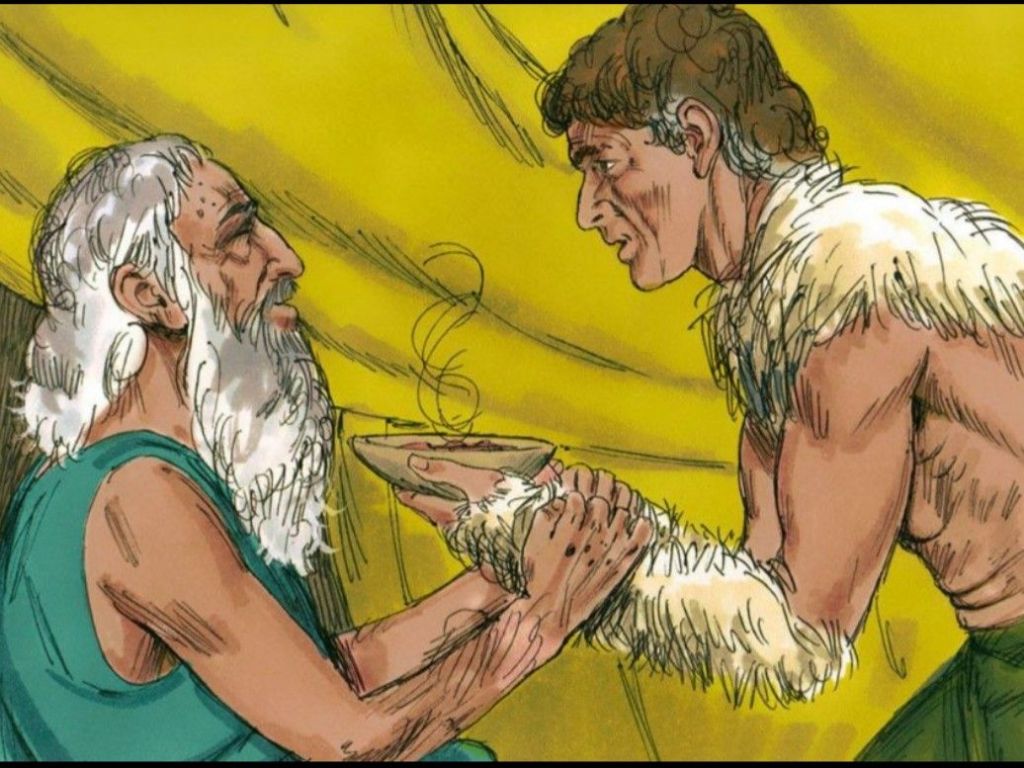
In contrast, Jacob begins his narrative with moral complexity. He obtains Esau’s birthright (Genesis 25:29–34) and deceives Isaac for the blessing (27:18–29). Unlike Abimelech, who defends innocence, Jacob must flee consequences (27:41–45). Yet Jacob receives direct covenant promises at Bethel (28:13–15), affirming the Abrahamic blessing through him. Where Abimelech responds to warning, Jacob grows through discipline.
Abimelech’s righteousness is reactive — he corrects wrong once confronted (20:6–8). Jacob’s faith is developmental — forged through hardship. Under Laban’s exploitation (31:6–7), Jacob endures and attributes his prosperity to God’s intervention (31:9, 42). Before facing Esau, he prays with humility: “I am unworthy of all the kindness…” (32:10–12). This contrasts with Abimelech’s political strength; Jacob demonstrates spiritual dependence.
A pivotal difference between the two men appears in divine encounter. Abimelech receives a dream warning (20:3), but Jacob wrestles personally with God at Peniel (32:24–30). There Jacob refuses to let go without blessing (32:26) and is renamed Israel (32:28). His transformation is covenantal and identity-shaping. Abimelech seeks peaceful coexistence with the covenant bearer (21:22–23); Jacob becomes the covenant bearer.
Both men make covenants: Abimelech establishes a treaty at Beersheba (21:27–31); Jacob makes covenant with Laban at Mizpah (31:44–54). Yet Jacob’s covenantal life is rooted in divine promise (28:13–15; 35:9–12), whereas Abimelech’s actions are pragmatic responses to observable blessing (26:28).
Thus, Abimelech models moral accountability outside the covenant, while Jacob embodies imperfect but persevering covenant faith.
Concluding insights.
It’s important for me to highlight Jacob’s righteous acts in spite of a temptation to focus on his sin.
Jacob’s faith matured into righteous action. At Bethel he set up a pillar and worshiped (28:18–22). In returning to Canaan, he humbled himself in prayer (32:9–12). After reconciliation with Esau, he built an altar at Shechem, calling it El-Elohe-Israel (33:20). He later led his household to put away foreign gods before returning to Bethel (35:2–4), demonstrating spiritual leadership and at the same time acknowledging that he had been around this kind of idolatry and tolerated it with his wives for decades. God reaffirmed the covenant promises there (35:9–12). Though flawed, Jacob’s life shows repentance, worship, covenant obedience, and perseverance — a trajectory from deception to devoted patriarchal faithfulness under divine promise.
Rebekah profoundly shaped Jacob’s early character. She orchestrated the deception of Isaac so Jacob would secure the blessing (Genesis 27:5–17), reinforcing cunning as a survival strategy. That pattern mirrors her own decisive action in securing Isaac as husband (Genesis 24:58). Her family background further illuminates this trait: her brother Laban later deceives Jacob by substituting Leah for Rachel (Genesis 29:23–25) and repeatedly altering wages (31:7). The family culture of shrewd bargaining and opportunism shaped Rebekah — and through her, Jacob — until hardship and divine encounter refined his character (Genesis 32:24–28).
I need to remember that worship sets me apart from just being a nice person. Fulfilling covenant expectations is highly important also. Finally I need to be aware of my family culture seeping through into my life as a disciple.
——-
 Morganite's Blog